
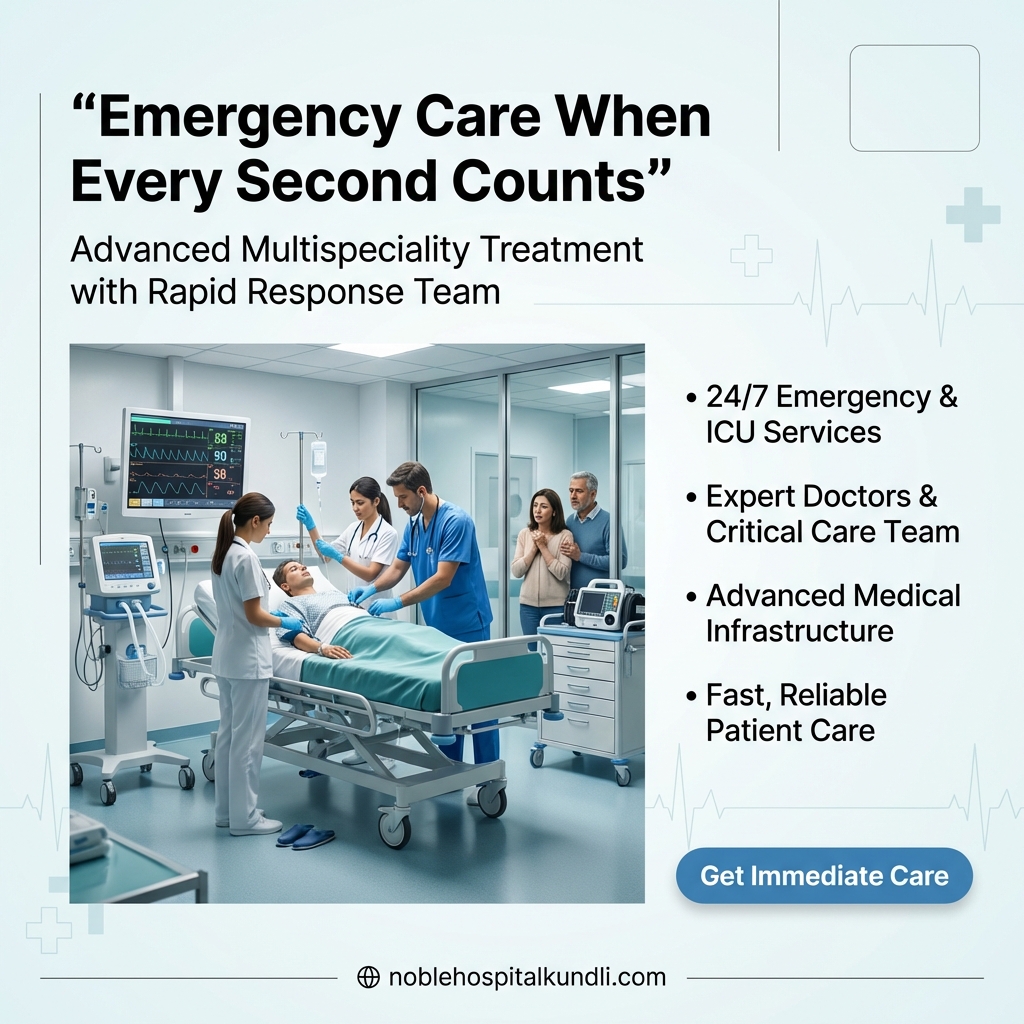
Medical emergencies can happen anytime and anywhere. Whether it is chest pain, a sudden fall, a seizure, breathing difficulty, burns, or a child with high fever, the first 10 minutes are often the most important.
Knowing what to do in the first 10 minutes of an emergency can help save lives, reduce complications, and keep the patient stable until medical help arrives.
For families in Kundli, Sonipat, Panipat, Narela, Rohini, and nearby areas, understanding basic emergency response steps can help you stay calm and act quickly.
At Noble Hospital Kundli, emergency care is available for heart conditions, accidents, pregnancy complications, fractures, pediatric emergencies, breathing issues, and other urgent medical needs.
Why the First 10 Minutes Matter
The first few minutes after an emergency are often called the “golden minutes” because early action can improve survival and recovery.
Quick response can:
- Prevent the condition from becoming worse
- Reduce pain and complications
- Improve the chances of recovery
- Keep the patient stable until medical help arrives
- Save lives in serious emergencies like heart attack, stroke, severe bleeding, or breathing difficulty
The most important thing is to stay calm, call for help, and avoid panic.
Step 1: Stay Calm and Assess the Situation
Before helping someone, quickly look around and understand what has happened.
Ask yourself:
- Is the person conscious?
- Is the person breathing?
- Is there severe bleeding?
- Is the person able to speak?
- Is the area safe?
- Does the person need immediate ambulance support?
If the patient is unconscious, struggling to breathe, bleeding heavily, or showing signs of a heart attack or stroke, seek emergency medical help immediately.
Step 2: Call Emergency Medical Help
One of the most important things to do in the first 10 minutes is to call emergency services or contact the nearest hospital.
Do not wait to see if the condition improves on its own.
You should seek immediate medical help for:
- Chest pain
- Difficulty breathing
- Severe bleeding
- Loss of consciousness
- Fits or seizures
- Stroke symptoms
- Major fractures or accidents
- Pregnancy emergencies
- High fever in babies
- Severe allergic reactions
At Noble Hospital Kundli, emergency care services are available for patients requiring urgent treatment and specialist support.
What to Do During Common Emergencies
Chest Pain or Suspected Heart Attack
Heart attack symptoms can include chest pain, sweating, shortness of breath, nausea, dizziness, and pain spreading to the arm, neck, jaw, or back.
What to do:
- Make the patient sit comfortably
- Keep them calm
- Loosen tight clothing
- Do not let them walk unnecessarily
- Call emergency medical help immediately
- If prescribed by a doctor, the patient may take their emergency heart medication
Do not ignore chest pain, especially in older adults or people with high BP, diabetes, or previous heart disease.
Stroke Symptoms
Stroke symptoms often appear suddenly.
Common signs include:
- Sudden weakness in the face, arm, or leg
- Slurred speech
- Confusion
- Difficulty walking
- Loss of balance
- Sudden severe headache
Remember the word FAST:
- Face drooping
- Arm weakness
- Speech difficulty
- Time to call emergency help
Quick treatment is critical because stroke care is most effective within the first few hours.
Severe Bleeding
If someone is bleeding heavily:
- Apply direct pressure using a clean cloth
- Raise the injured area if possible
- Do not remove large objects stuck in the wound
- Keep the patient lying down if they feel weak or dizzy
- Seek emergency care immediately
Heavy blood loss can quickly become dangerous.
Burns
For burns caused by hot water, fire, chemicals, or electricity:
- Move the person away from the source of the burn
- Cool the burn under running water for at least 10 to 20 minutes
- Do not apply toothpaste, butter, oil, or ice
- Cover the burn with a clean cloth
- Seek medical attention for severe burns
Seizures or Fits
Seeing someone have a seizure can be frightening, but staying calm is important.
What to do:
- Move dangerous objects away
- Turn the person gently onto their side
- Do not put anything in their mouth
- Do not hold them down
- Time the seizure
- Seek medical help if the seizure lasts more than five minutes
Breathing Difficulty
Breathing problems may happen due to asthma, allergy, infection, heart problems, or choking.
What to do:
- Sit the patient upright
- Help them use their inhaler if prescribed
- Loosen tight clothing
- Keep the room ventilated
- Seek emergency care if breathing worsens
Fractures, Falls, and Injuries
If someone falls or has a suspected fracture:
- Avoid moving the injured body part unnecessarily
- Use a cloth or support to keep the area stable
- Apply ice wrapped in cloth to reduce swelling
- Seek orthopedic evaluation quickly
Back injuries, head injuries, and severe fractures should always be treated as emergencies.
Pregnancy Emergencies
Pregnant women may require urgent care for:
- Severe abdominal pain
- Heavy bleeding
- Reduced baby movements
- High BP symptoms
- Sudden swelling
- Labor pain before the due date
Immediate medical attention is important to protect both the mother and baby.
Child Emergencies
Parents should seek urgent pediatric care if a child has:
- High fever
- Breathing difficulty
- Fits
- Severe vomiting
- Dehydration
- Injury or fall
- Persistent crying
- Unusual sleepiness
Children can become unwell quickly, so early treatment is important.
Mistakes to Avoid During an Emergency
In panic situations, people sometimes make mistakes that can make the condition worse.
Avoid:
- Delaying medical help
- Giving unknown medicines
- Forcing food or water into an unconscious person
- Moving someone with a suspected neck or spine injury
- Ignoring severe symptoms
- Following unverified home remedies
Why Choose Noble Hospital Kundli for Emergency Care?
Noble Hospital Kundli provides emergency and multispeciality care for families in Kundli, Sonipat, Panipat, Narela, Rohini, and nearby areas.
The hospital offers support for:
- Heart emergencies
- Pregnancy and gynecology emergencies
- Pediatric care
- Orthopedic injuries
- Skin and allergy issues
- Fever and infections
- Fractures and accidents
- BP and chest pain evaluation
With experienced doctors, emergency support, and modern facilities, the hospital aims to provide fast and effective care when families need it most.
Conclusion
Medical emergencies are stressful, but knowing what to do in the first 10 minutes can make a major difference.
Stay calm, assess the situation, call for help, and provide basic first aid until professional care is available.
For families in Kundli, Sonipat, Panipat, Narela, Rohini, and nearby areas, quick access to trusted emergency care can help protect your loved ones during unexpected situations.
Frequently Asked Questions
What is the most important thing to do during an emergency?
The most important step is to stay calm, call emergency medical help, and ensure the patient is safe.
When should I call an ambulance?
You should call an ambulance for chest pain, breathing difficulty, unconsciousness, severe bleeding, stroke symptoms, major injuries, or pregnancy emergencies.
What should I do if someone faints?
Lay the person flat, raise their legs slightly, loosen tight clothing, and seek medical advice if they do not wake up quickly.
What should I do if a child has a high fever?
Keep the child hydrated, monitor their temperature, and seek urgent medical care if the fever is very high, persistent, or associated with fits or breathing problems.
Can Noble Hospital Kundli handle emergency cases?
Yes, Noble Hospital Kundli provides emergency care for adults, children, pregnant women, heart patients, orthopedic injuries, and other urgent medical conditions.
Leave a Reply