
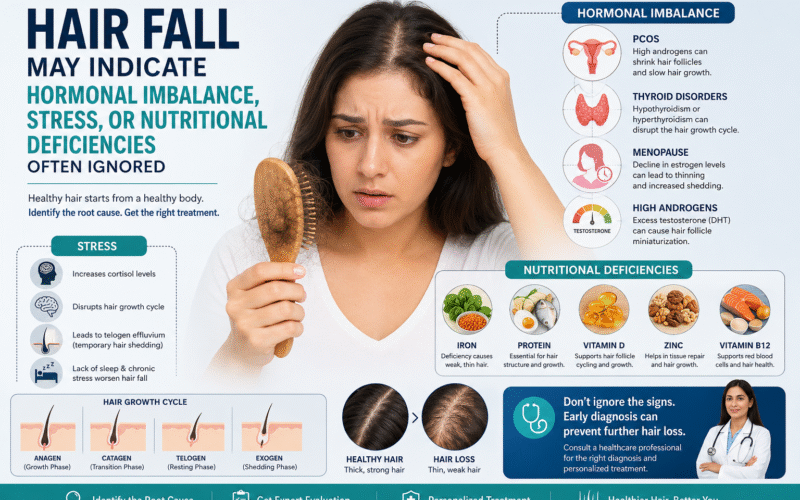
Hair fall is a common concern affecting millions of people worldwide. While losing 50–100 hairs per day is considered normal, excessive shedding can signal a deeper health issue. One of the most overlooked causes is hormonal imbalance hair loss, which may be accompanied by chronic stress or nutritional deficiencies that often go undiagnosed.
Many people spend months trying shampoos, oils, and supplements without identifying the actual cause of their hair loss. Understanding the underlying reason is the first step toward effective treatment and long-term hair health.
If your hair fall is persistent, worsening, or associated with other symptoms such as irregular periods, fatigue, unexplained weight changes, or thinning eyebrows, it may be time to consult a healthcare professional.
Why Does Hormonal Imbalance Cause Hair Loss?
Hormones regulate numerous body functions, including the natural hair growth cycle. When hormone levels fluctuate, hair follicles may prematurely enter the shedding phase, leading to noticeable thinning.
Common Hormonal Conditions Linked to Hair Fall
Can PCOS Cause Hair Loss?
Yes. Polycystic Ovary Syndrome (PCOS) is one of the leading causes of hormonal imbalance hair loss in women. Elevated androgen levels can shrink hair follicles, causing gradual thinning around the scalp.
Common symptoms include:
- Irregular menstrual cycles
- Acne
- Facial hair growth
- Weight gain
- Scalp hair thinning
Does Thyroid Disease Lead to Hair Fall?
Both hypothyroidism and hyperthyroidism can disrupt the hair growth cycle.
Symptoms may include:
- Fatigue
- Dry skin
- Weight fluctuations
- Cold or heat intolerance
- Brittle hair
Treating thyroid disorders often helps reduce excessive hair shedding.
Can Menopause https://anejahospitals.com/Trigger Hair Loss?
During menopause, estrogen levels decline while androgen activity becomes relatively more dominant. This hormonal shift can contribute to thinner hair, reduced volume, and slower regrowth.
Does Testosterone Affect Hair Growth?
In genetically susceptible individuals, dihydrotestosterone (DHT), a derivative of testosterone, can shrink hair follicles, resulting in androgenetic alopecia or pattern hair loss.
How Does Stress Contribute to Hair Fall?
Emotional and physical stress are frequently underestimated causes of hair shedding.
Can Stress Cause Sudden Hair Loss?
Absolutely.
High stress levels increase cortisol production, disrupting the normal hair growth cycle. This can trigger a condition known as telogen effluvium, where a significant number of hair follicles enter the resting phase simultaneously.
Common stress-related triggers include:
- Major illness
- Surgery
- Childbirth
- Emotional trauma
- Sleep deprivation
- Workplace stress
Stress-related hair loss often becomes noticeable two to three months after the triggering event.
Nutritional Deficiencies That Can Cause Hair Fall
Healthy hair requires adequate vitamins, minerals, proteins, and essential nutrients.
Which Vitamin Deficiencies Cause Hair Loss?
Several nutritional deficiencies are associated with excessive shedding.
Iron Deficiency
Iron deficiency reduces oxygen delivery to hair follicles, weakening hair growth.
Vitamin D Deficiency
Low vitamin D levels may affect follicle cycling and contribute to persistent thinning.
Vitamin B12 Deficiency
Vitamin B12 supports healthy red blood cells that nourish hair follicles.
Zinc Deficiency
Zinc plays a vital role in tissue repair and healthy hair follicle function.
Protein Deficiency
Hair consists primarily of keratin, a protein. Inadequate protein intake can slow hair growth and increase shedding.
Signs Your Hair Fall Needs Medical Evaluation
When Should You See a Healthcare Professional?
Consult a qualified healthcare provider if you notice:
- Hair shedding lasting longer than three months
- Rapid thinning
- Bald patches
- Hair loss with irregular periods
- Hair loss accompanied by fatigue
- Sudden weight changes
- Persistent scalp discomfort
- Family history of significant hair loss
Early diagnosis can improve treatment outcomes.
How Is Hormonal Imbalance Hair Loss Diagnosed?
Diagnosis typically begins with a detailed medical history and physical examination.
Your healthcare provider may recommend:
- Hormone profile testing
- Thyroid function tests
- Iron studies
- Vitamin D levels
- Vitamin B12 assessment
- Zinc evaluation
- Blood glucose testing
- PCOS evaluation (if indicated)
These investigations help identify the underlying cause instead of simply treating symptoms.
Treatment Options for Hormonal Imbalance Hair Loss
Treatment depends on the root cause.
Lifestyle Modifications
- Eat a balanced, protein-rich diet.
- Improve sleep quality.
- Exercise regularly.
- Manage stress through meditation or mindfulness.
- Avoid smoking.
- Stay hydrated.
Correct Nutritional Deficiencies
Healthcare professionals may recommend targeted supplementation after laboratory evaluation.
Medical Management
Hormonal disorders such as thyroid disease or PCOS require condition-specific treatment. Appropriate medical therapy often reduces hair fall and promotes healthier regrowth.
Hair Restoration Therapies
Depending on the diagnosis, healthcare providers may recommend:
- Topical therapies
- Oral medications
- Platelet-rich plasma (PRP)
- Low-level laser therapy
- Advanced hair restoration procedures where appropriate
Treatment should always be individualized.
Can Hormonal https://anejahospitals.com/Hair Loss Be Reversed?
In many cases, yes.
Hair regrowth depends on:
- Early diagnosis
- Treating the underlying hormonal condition
- Correcting nutritional deficiencies
- Reducing chronic stress
- Following a consistent treatment plan
The earlier treatment begins, the better the likelihood of preserving healthy hair follicles.
Why Self-Treatment Often Fails
Many individuals purchase expensive hair products without identifying the real cause of their hair loss.
Since hormonal imbalance hair loss often results from internal medical conditions, cosmetic products alone may provide limited improvement.
A comprehensive medical evaluation helps determine whether hormones, nutrition, genetics, stress, or another health condition is responsible.
Take the First Step Toward Healthier Hair
Persistent hair fall should never be ignored. It may be your body’s way of signaling an underlying hormonal disorder, nutritional deficiency, or chronic stress.
If you’re experiencing ongoing hair loss, seek evaluation from a qualified healthcare provider. Early diagnosis and personalized treatment can improve not only your hair health but also your overall well-being.
Book a professional consultation today to identify the root cause of your hair fall and receive a treatment plan tailored to your specific needs.
Frequently Asked Questions
Is hormonal imbalance hair loss permanent?
Not always. Many cases improve after the underlying hormonal condition is treated and deficiencies are corrected.
Which hormone is most commonly linked to hair loss?
Androgens, thyroid hormones, estrogen, progesterone, and cortisol all play important roles in maintaining healthy hair growth.
Can stress alone cause excessive hair fall?
Yes. Chronic stress can trigger telogen effluvium, leading to significant but often temporary hair shedding.
Which blood tests are recommended for hair loss?
Healthcare providers commonly recommend thyroid function tests, iron studies, ferritin, vitamin D, vitamin B12, zinc levels, and hormone profiles depending on symptoms.
Can vitamin deficiencies cause hair thinning?
Yes. Deficiencies in iron, vitamin D, vitamin B12, zinc, and protein are frequently associated with excessive hair shedding and slower hair growth.
Leave a Reply