
Pregnancy is a beautiful journey, but many expecting mothers experience anxiety about childbirth because they don’t know what to expect. Understanding the normal delivery process can replace fear with confidence and help you prepare mentally and physically for labor.
Every labor experience is unique, but the stages of vaginal birth generally follow a predictable pattern. Knowing each step allows mothers to recognize what is happening and work with their healthcare team throughout the birth.
What Is a Normal Delivery?
A normal delivery process refers to the birth of a baby through the vagina without requiring major surgical intervention. It is the most common method of childbirth when both mother and baby are healthy.
Many women successfully deliver naturally with appropriate medical monitoring, emotional support, and effective pain management techniques.
Why Understanding the Normal Delivery Process Helps Reduce Fear
Fear often comes from uncertainty. Learning how labor progresses helps expecting mothers:
- Know what happens at each stage
- Understand what sensations are normal
- Recognize when to go to the hospital
- Feel more confident during labor
- Communicate effectively with healthcare providers
- Make informed decisions about pain relief
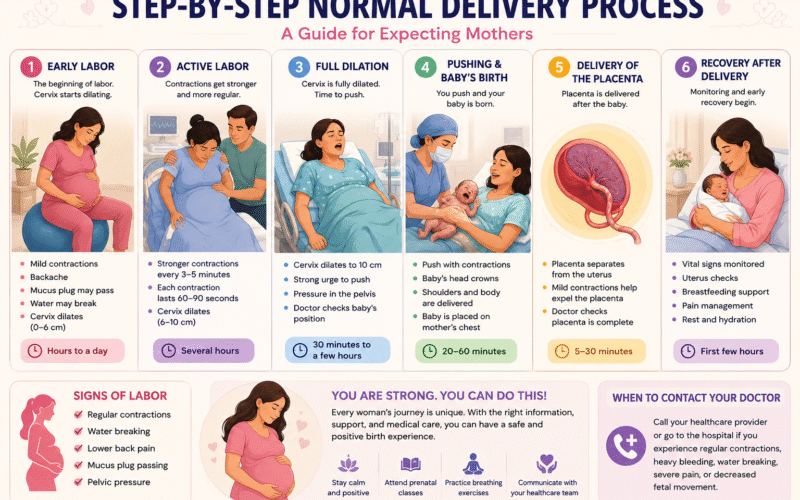
Step 1: Early Labor Begins
Early labor is the beginning of the normal delivery process.
Signs of Early Labor
- Mild contractions
- Backache
- Lower abdominal discomfort
- Passing the mucus plug
- Water breaking (for some women)
During this stage, contractions gradually become regular and stronger while the cervix begins to open.
How Long Does Early Labor Last?
It can last anywhere from several hours to over a day, especially for first-time mothers.
Step 2: Active Labor
Active labor begins when the cervix dilates approximately 6 cm.
During this stage:
- Contractions become stronger
- Contractions occur every 3–5 minutes
- Each https://noblehospitalkundli.com/contraction lasts around one minute
- The cervix continues opening until 10 cm
Healthcare professionals closely monitor:
- Baby’s heart rate
- Mother’s blood pressure
- Labor progression
- Baby’s position
Many women choose breathing exercises, movement, warm showers, epidurals, or other pain relief methods during this stage.
Step 3: Full Cervical Dilation
Once the cervix reaches 10 cm, the body prepares for pushing.
Many mothers experience:
- Increased pressure in the pelvis
- Strong urge to push
- More intense contractions
The medical team guides mothers on effective pushing techniques while monitoring both mother and baby.
Step 4: Pushing and Baby’s Birth
This is often the most anticipated stage of the normal delivery process.
With each contraction:
- The baby gradually moves through the birth canal.
- The baby’s head crowns.
- The healthcare provider supports a controlled delivery of the head and shoulders.
- The rest of the body follows shortly afterward.
Immediately after birth:
- The baby begins breathing.
- Skin-to-skin contact is encouraged.
- The umbilical cord is clamped and cut.
- Initial newborn assessments are performed.
Step 5: Delivery of the Placenta
After the baby is born, the uterus continues contracting to deliver the placenta.
This usually occurs within 5–30 minutes.
Healthcare providers examine the placenta and monitor the mother for bleeding to ensure a safe recovery.
Step 6: Recovery After Normal Delivery
The first few hours after birth are carefully monitored.
Doctors and nurses check:
- Blood pressure
- Uterine contractions
- Bleeding
- Pain levels
- Baby’s feeding
- Mother’s overall well-being
Breastfeeding is often initiated during this period because early feeding supports bonding and stimulates milk production.
Common Pain Relief Options During Labor
Many women worry about labor pain. Fortunately, several safe options are available depending on medical advice.
These include:
- Breathing techniques
- Relaxation exercises
- Walking during labor
- Warm water therapy
- Massage
- Nitrous oxide (where available)
- Epidural anesthesia
- Intravenous pain medications
Discuss pain management preferences with your obstetrician before your due date.
When Should You Go to the Hospital?
Contact your healthcare provider or go to the hospital if you experience:
- Regular contractions every 5 minutes
- Water breaking
- Heavy bleeding
- Reduced fetal movement
- Severe abdominal pain
- High blood pressure symptoms
- Persistent severe headache
- Vision changes
Seek urgent medical evaluation if any warning signs occur.
How Can You Prepare for a Normal Delivery?
Preparation can improve confidence and support a positive birth experience.
Helpful steps include:
- Attend prenatal appointments regularly.
- Take childbirth education classes.
- Maintain a balanced diet.
- Stay physically active as advised.
- Practice breathing and relaxation exercises.
- Pack your hospital bag early.
- Discuss your birth plan with your healthcare provider.
Myths About Normal Delivery
Myth: Normal delivery is unbearable.
Fact: Pain management options, emotional support, and labor coaching help many women cope effectively.
Myth: Every first labor lasts several days.
Fact: Labor duration varies significantly from person to person.
Myth: A cesarean section is always safer.
Fact: The safest delivery method depends on the health of the mother and baby. Vaginal delivery is often recommended when there are no medical complications.
Frequently Asked Questions
Is normal delivery safe?
For most healthy pregnancies, vaginal birth is considered a safe option when monitored by qualified healthcare professionals.
How long does the normal https://noblehospitalkundli.com/delivery process take?
Labor may last from several hours to over 24 hours, especially during a first pregnancy.
Can I reduce labor pain naturally?
Breathing exercises, movement, relaxation, massage, and continuous labor support can help manage discomfort.
When should I call my doctor?
Call your healthcare provider if contractions become regular, your water breaks, you notice heavy bleeding, or fetal movements decrease.
Is every pregnancy suitable for normal delivery?
No. Some pregnancies require a cesarean section due to medical conditions or complications. Your obstetrician will recommend the safest option.
Conclusion
Understanding the normal delivery process can greatly reduce fear and uncertainty during pregnancy. Knowing each stage of labor, recognizing normal changes, and preparing with your healthcare team empowers expecting mothers to approach childbirth with greater confidence.
Remember that every birth experience is different. Maintaining open communication with your obstetrician, attending regular prenatal check-ups, and following personalized medical advice are the best ways to support a safe and positive delivery.
Book a Consultation
If you are pregnant and have questions about your birth plan, labor preparation, or delivery options, schedule a consultation with an experienced obstetrician. Personalized prenatal care and childbirth education can help you feel informed, prepared, and confident as you approach your baby’s birth.
Leave a Reply