
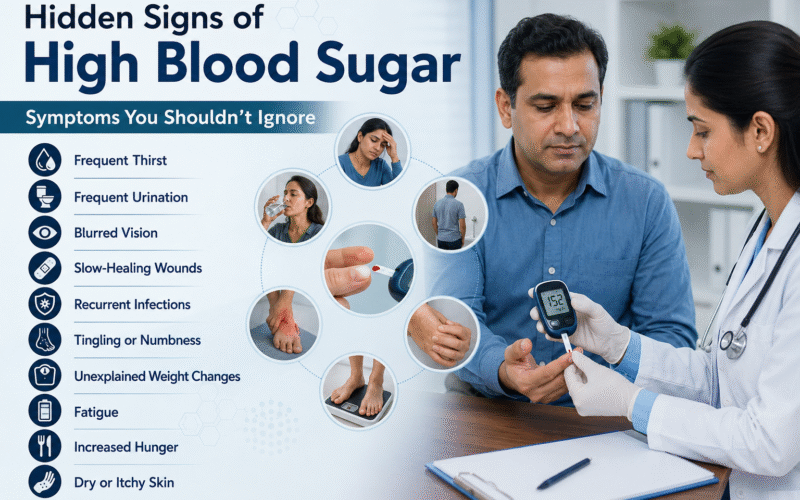
High blood sugar, also known as hyperglycemia, is often associated with diabetes. But one of the biggest challenges is that blood sugar can remain elevated for a long time without causing obvious symptoms. Some signs may be mild, easy to dismiss, or mistaken for everyday tiredness.
Recognizing these hidden warning signs can encourage timely testing and medical guidance.
What Is High Blood Sugar?
Blood sugar, or blood glucose, is the body’s main source of energy. Insulin helps glucose move from the bloodstream into cells where it can be used for energy.
When the body does not produce enough insulin or cannot use it effectively, glucose can build up in the blood. Persistently high blood sugar may eventually affect the eyes, kidneys, nerves, heart, and blood vessels.
Hidden Signs of High Blood Sugar
1. Feeling Tired All the Time
Persistent fatigue can sometimes be more than a busy schedule or lack of sleep. When glucose cannot enter cells efficiently, the body may struggle to produce energy properly.
If you regularly feel exhausted despite adequate rest, it may be worth discussing with a healthcare professional.
2. Increased Thirst
One common but sometimes overlooked sign is feeling unusually thirsty.
When blood glucose becomes high, the kidneys work harder to remove excess glucose through urine. This can contribute to fluid loss and make you feel thirsty more frequently.
3. Frequent Urination
Are you visiting the bathroom more often than usual, especially at night?
Frequent urination can occur when the kidneys attempt to eliminate excess glucose from the bloodstream. If this happens persistently, blood glucose testing may be appropriate.
4. Blurred Vision
Temporary or fluctuating blurred vision can sometimes occur when blood sugar levels change significantly.
Although there are many possible causes of blurred vision, recurring changes should not simply be ignored—particularly if other symptoms of high blood sugar are present.
5. Slow-Healing Cuts and Wounds
High blood sugar over time can affect circulation and the body’s ability to respond effectively to infections and injuries.
If small cuts, wounds, or infections seem to take unusually long to heal, it is worth getting evaluated.
6. Recurrent Infections
Frequent infections, including certain skin or urinary infections, may sometimes be associated with poorly controlled blood sugar.
Repeated infections don’t automatically mean you have diabetes, but they can be one reason to discuss blood glucose testing with your doctor.
7. Tingling or Numbness
Persistent tingling, burning, or numbness—particularly in the hands or feet—can have several causes. Long-term high blood sugar can damage nerves, a condition known as diabetic neuropathy.
These symptoms deserve medical evaluation rather than being dismissed as simple weakness or poor circulation.
8. Unexplained Weight Changes
Unexpected weight loss can occur when the body cannot effectively use glucose for energy and begins using stored fat and muscle instead.
On the other hand, weight gain can also be associated with insulin resistance and metabolic problems. Significant unexplained changes in weight should be evaluated.
9. Increased Hunger
Feeling hungry shortly after eating may sometimes be linked to problems with how the body uses glucose.
When glucose is not being utilized efficiently by cells, the body may continue sending hunger signals despite having consumed food.
10. Dry or Itchy Skin
Dehydration associated with frequent urination can contribute to dry skin. Some people with diabetes may also experience recurring itching or skin problems.
Persistent skin changes should be checked because they can have many different causes.
Why Can High Blood Sugar Go Unnoticed?
Not everyone experiences obvious symptoms when blood glucose starts rising. In some people, the increase happens gradually, allowing the body to adapt to the changes.
This is why relying only on symptoms isn’t enough. A blood sugar test is a much more reliable way to determine whether glucose levels are elevated.
People with risk factors such as excess weight, family history of diabetes, high blood pressure, physical inactivity, or a history of abnormal blood sugar may benefit from discussing screening with a healthcare professional.
When Should You Get Your Blood Sugar Checked?
Consider speaking with a doctor if you notice:
- Persistent thirst or frequent urination
- Unexplained fatigue
- Recurrent infections
- Slow-healing wounds
- Unexplained weight changes
- Repeated blurred vision
- Tingling or numbness in the hands or feet
- A strong family history of diabetes
A healthcare professional may recommend tests such as fasting blood glucose, HbA1c, or other appropriate tests depending on your symptoms and risk factors.
Don’t Wait for Symptoms to Become Severe
High blood sugar doesn’t always announce itself loudly. Sometimes, the earliest clues are subtle changes that we may attribute to stress, aging, a busy lifestyle, or lack of sleep.
Paying attention to persistent symptoms and getting appropriate testing can help identify blood sugar problems earlier.
Remember: symptoms can raise suspicion, but only appropriate medical evaluation and blood glucose testing can help determine whether you have high blood sugar or diabetes.
If you have persistent symptoms or are concerned about your blood sugar levels, speak with a qualified healthcare professional rather than self-diagnosing or starting medication on your own.
Leave a Reply