
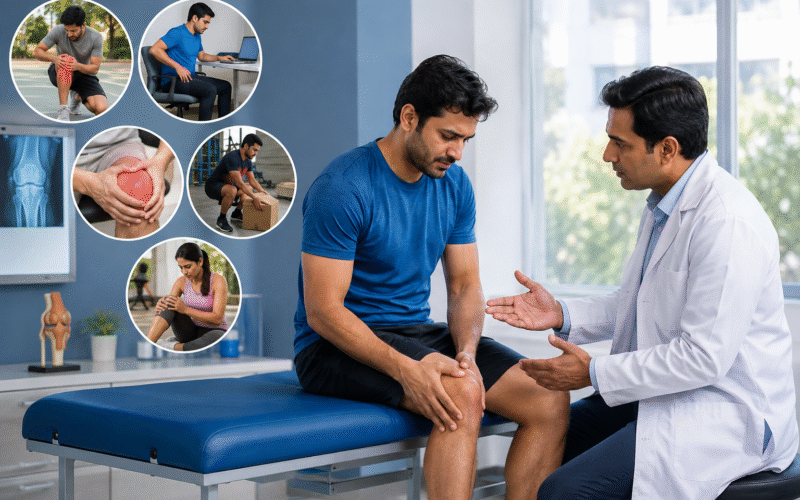
Knee pain is often considered a normal part of getting older. Many people assume that aching, stiffness, or discomfort in the knees simply means the joints are “wearing out.” But that is not always the case.
Knee pain can affect people of all ages, and the underlying cause may have nothing to do with age. From injuries and muscle weakness to arthritis and lifestyle factors, several conditions can contribute to knee discomfort.
Why Does Knee Pain Happen?
The knee is a complex joint that supports much of the body’s weight and helps us walk, run, climb stairs, and perform everyday activities. Because it is under constant stress, different structures around the knee can become irritated or injured.
Some common causes include:
- Sports or physical injuries: Sudden movements, falls, or excessive exercise can cause ligament, meniscus, or muscle injuries.
- Muscle weakness: Weak thigh and hip muscles can put additional stress on the knee joint.
- Overuse: Repetitive activities such as running, squatting, or climbing can cause inflammation and pain.
- Arthritis: Osteoarthritis and other forms of arthritis can affect the knee, but they are not exclusively problems of old age.
- Poor posture or movement patterns: Incorrect walking, running, or exercise techniques can place unnecessary pressure on the knee.
- Previous injuries: An old knee injury can sometimes lead to recurring pain or joint problems years later.
- Weight-related stress: Excess body weight can increase the load placed on the knees during daily activities.
Knee Pain Can Affect Younger People Too
Young adults and even teenagers can experience knee pain. Athletes, people who exercise intensely, and individuals who suddenly increase their physical activity may develop problems such as tendon irritation, ligament injuries, or overuse-related pain.
Even everyday habits can contribute. Sitting for long periods, having weak muscles, poor exercise technique, or suddenly starting a demanding workout routine can place extra stress on the knees.
So, if you are young and experiencing persistent knee pain, don’t simply ignore it because you think it will go away on its own.
When Should You Take Knee Pain Seriously?
Occasional mild discomfort after unusual physical activity may improve with rest. However, medical evaluation may be important if your knee pain:
- Continues for several days or keeps coming back
- Gets worse over time
- Causes swelling or stiffness
- Makes walking or climbing stairs difficult
- Causes the knee to lock or give way
- Develops after an injury
- Interferes with your daily activities
Identifying the cause early can help prevent a minor problem from becoming a long-term issue.
Don’t Diagnose Your Knee Pain by Age
One of the biggest mistakes people make is assuming that knee pain automatically means arthritis or age-related joint damage.
The right diagnosis depends on your symptoms, medical history, physical examination, and, when necessary, imaging or other investigations. Treatment also depends on the underlying cause.
Depending on the condition, management may involve physiotherapy, strengthening exercises, activity modification, medications, weight management, injections, or other treatments recommended by a qualified healthcare professional.
Take Care of Your Knees at Every Age
You don’t have to wait until knee pain becomes severe to start caring for your joints. Maintaining a healthy weight, strengthening the muscles around the knee, warming up before exercise, using proper exercise techniques, and avoiding sudden increases in physical activity can help support knee health.
Final Thoughts
Knee pain isn’t always due to age. It can be caused by injuries, muscle weakness, overuse, arthritis, lifestyle factors, or several other conditions.
Instead of assuming that knee pain is simply a part of growing older, pay attention to persistent or worsening symptoms and consider getting the right evaluation. Understanding the actual cause is the first step toward choosing the right treatment and protecting your mobility for the future.
Leave a Reply