
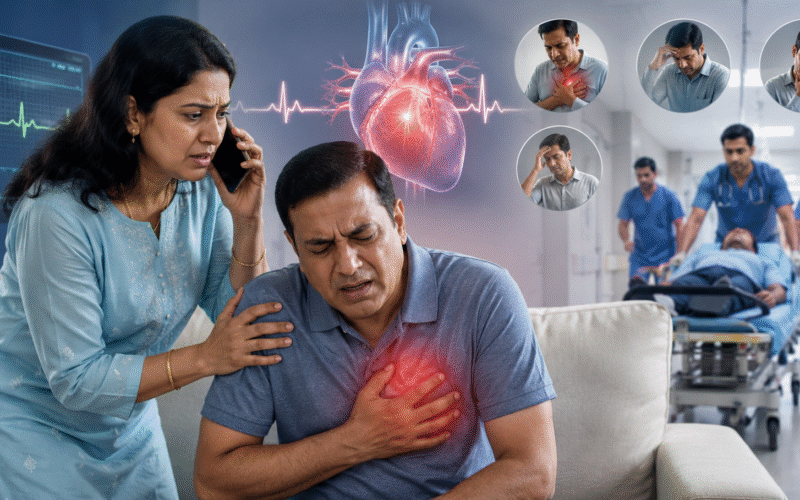
Chest pain is a symptom that should never be ignored. While it can sometimes be caused by acidity, muscle strain, anxiety, or other less serious conditions, chest pain can also be a warning sign of a heart attack or another life-threatening medical emergency.
Knowing when chest pain requires immediate medical attention can help prevent serious complications and, in some cases, save a life.
What Does Chest Pain Feel Like?
Chest pain can vary from person to person. It may feel like:
- Pressure, heaviness, squeezing, or tightness in the chest
- Burning or discomfort behind the breastbone
- A sharp or stabbing pain
- Pain that comes and goes
- A feeling of fullness or discomfort in the chest
The intensity of pain does not always indicate how serious the problem is. A heart attack can sometimes cause mild or unusual symptoms.
When Is Chest Pain an Emergency?
Seek emergency medical care immediately if chest pain:
- Starts suddenly and is severe, persistent, or worsening
- Feels like pressure, squeezing, heaviness, or tightness
- Spreads to the arm, shoulder, back, neck, jaw, or upper abdomen
- Occurs along with shortness of breath
- Is accompanied by sweating, nausea, vomiting, or dizziness
- Causes fainting or extreme weakness
- Occurs with a rapid, irregular, or unusual heartbeat
- Develops during physical activity and improves with rest
- Happens in someone with known heart disease or significant cardiovascular risk factors
Do not wait for the pain to become severe before seeking help.
Chest Pain and Heart Attack
A heart attack occurs when blood flow to part of the heart muscle becomes blocked. Without timely treatment, the affected heart muscle can become permanently damaged.
Some people experience classic chest pressure, while others may have less obvious symptoms. Women, older adults, and people with diabetes may sometimes experience symptoms such as unusual fatigue, nausea, shortness of breath, back discomfort, or jaw pain without severe chest pain.
This is why unexplained chest discomfort should be taken seriously.
Could It Be Acidity or Gas?
Acidity and gas can also cause chest discomfort, especially after meals. However, it can be difficult to reliably distinguish digestive pain from heart-related pain based only on how it feels.
If you are unsure whether your chest pain is caused by acidity, muscle strain, or your heart, do not self-diagnose. Seek medical evaluation, particularly if the pain is new, unexplained, or associated with other warning signs.
What Should You Do During a Chest Pain Emergency?
If you suspect a heart attack or another serious condition:
- Stop physical activity and sit or rest in a comfortable position.
- Seek emergency medical help immediately.
- Avoid driving yourself to the hospital if emergency medical transport is available.
- Do not ignore the symptoms simply because they temporarily improve.
- Follow instructions provided by emergency medical professionals.
Early evaluation can make an important difference in treatment and recovery.
Who Has a Higher Risk of Heart-Related Chest Pain?
The risk of heart disease can be higher in people with factors such as:
- High blood pressure
- Diabetes
- High cholesterol
- Smoking or tobacco use
- Obesity or physical inactivity
- A personal history of heart disease
- A family history of cardiovascular disease
- Increasing age
However, chest pain should not be dismissed simply because someone does not have these risk factors.
When Should You See a Doctor?
Even if chest pain is not severe enough to feel like an emergency, medical evaluation is recommended when it is:
- New or unexplained
- Recurrent
- Triggered by exercise or physical exertion
- Associated with breathlessness or unusual fatigue
- Becoming more frequent or intense
- Affecting your daily activities
A doctor may recommend tests such as an ECG, blood tests, echocardiography, stress testing, or other investigations depending on your symptoms and risk factors.
Don’t Ignore Chest Pain
Chest pain does not always mean a heart attack, but you cannot safely determine the cause based on symptoms alone. When chest pain is sudden, persistent, severe, or accompanied by breathing difficulty, sweating, nausea, fainting, or pain spreading to other parts of the body, treat it as a medical emergency.
When it comes to chest pain, it is better to seek urgent medical attention and find out that it is not serious than to delay treatment for a potentially life-threatening condition.
If you or someone around you develops concerning chest pain, seek emergency medical care immediately.
Leave a Reply