
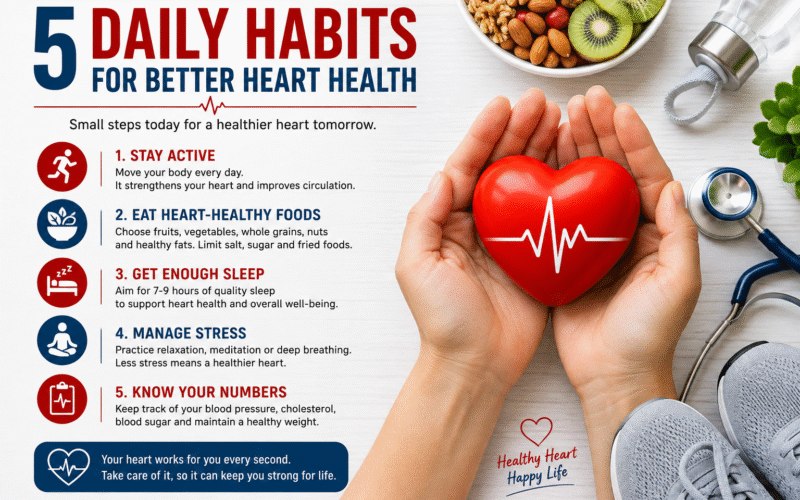
Your heart works continuously—pumping blood, supplying oxygen, and supporting almost every function in your body. While genetics and age can influence heart health, your everyday habits also play a major role.
The good news is that you don’t need to make drastic lifestyle changes overnight. Small, consistent habits can help support a healthier heart and reduce the risk of cardiovascular problems.
Here are 5 daily habits for better heart health that you can start incorporating into your routine.
1. Stay Physically Active
Regular physical activity is one of the simplest ways to support your heart. Exercise helps improve circulation, maintain a healthy weight, and manage blood pressure and cholesterol levels.
You don’t necessarily need an intense workout every day. Activities such as:
- Brisk walking
- Cycling
- Swimming
- Light jogging
- Yoga or stretching
- Taking the stairs instead of the lift
can contribute to a more active lifestyle.
Tip: Aim to move regularly throughout the day instead of sitting for long, uninterrupted periods.
2. Choose Heart-Friendly Foods
What you eat every day can significantly affect your heart health. Try to build meals around vegetables, fruits, whole grains, pulses, nuts, seeds, and other nutrient-rich foods.
At the same time, limit excessive intake of:
- Salt
- Added sugar
- Deep-fried foods
- Highly processed foods
- Trans fats
- Excessive saturated fats
Instead of making your diet overly restrictive, focus on making healthier choices more often.
Simple change: Add more vegetables and whole grains to your meals and reduce highly processed snacks.
3. Get Enough Quality Sleep
Sleep isn’t just important for feeling refreshed—it also plays a role in overall cardiovascular health. Poor or insufficient sleep can make it harder to maintain healthy blood pressure, weight, and blood sugar levels.
Most adults should aim for around 7–9 hours of quality sleep each night.
To improve your sleep routine:
- Maintain a consistent bedtime
- Reduce screen use before sleeping
- Keep your bedroom comfortable and quiet
- Avoid heavy meals close to bedtime
- Limit caffeine late in the day
A regular sleep schedule can be a simple but https://noblehospitalkundli.com/valuable part of a heart-healthy lifestyle.
4. Manage Stress Every Day
Long-term stress can affect your overall health and may contribute to unhealthy habits such as overeating, inactivity, or poor sleep.
Make time for activities that help you relax, such as:
- Deep breathing
- Meditation
- Walking outdoors
- Reading
- Spending time with family
- Listening to music
- Practising yoga
You don’t need hours of relaxation. Even a few minutes of intentional stress management can help you create a healthier daily routine.
5. Know Your Numbers
One of the most important heart-health habits is keeping track of key health measurements.
Depending on your age and health status, regular monitoring may include:
- Blood pressure
- Blood sugar
- Cholesterol
- Body weight
- Waist circumference
High blood pressure and cholesterol can sometimes have no obvious symptoms, which is why regular health check-ups are important.
If your doctor recommends testing or monitoring, follow their advice and discuss any abnormal results with them.
Small Habits Can Make a Big Difference
Better heart health isn’t about following a perfect routine. It’s about making healthier choices consistently.
Move more, eat better, sleep well, manage stress, and keep track of your health. These simple habits can become powerful tools for protecting your heart over time.
If you experience symptoms such as chest pain or pressure, unexplained shortness of breath, fainting, or sudden severe discomfort, seek urgent medical attention rather than trying to manage the symptoms at home.
Final Thought
Your heart doesn’t need complicated solutions—it needs consistent care. Start with one healthy habit today and gradually build a heart-friendly lifestyle that you can maintain for years to come.
Leave a Reply