
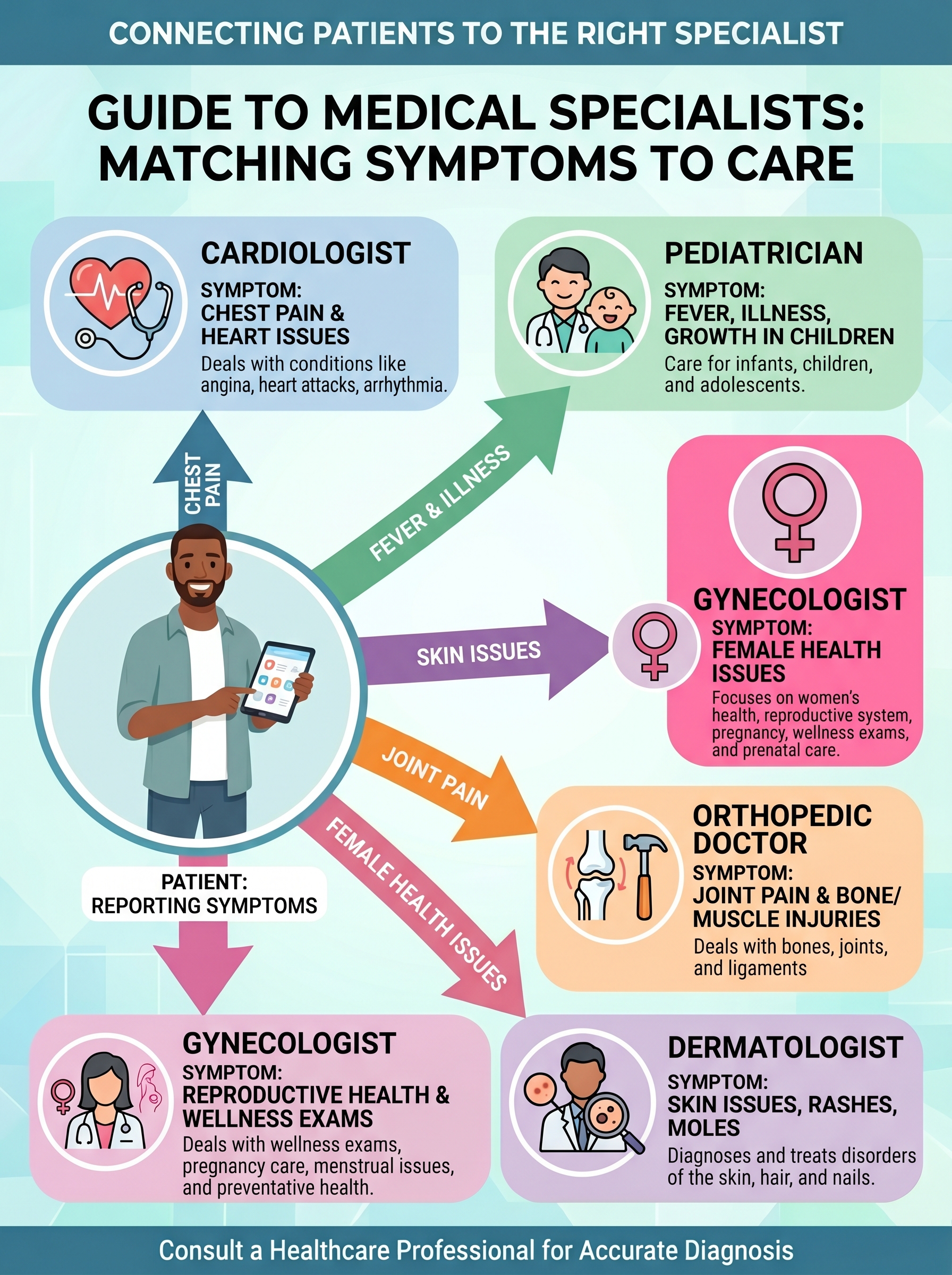
When you’re not feeling well, the biggest confusion isn’t always the symptom—it’s which doctor to consult for symptoms. Should you visit a general physician? A specialist? Or go directly to a hospital?
Making the wrong choice can delay diagnosis, increase costs, and prolong discomfort. This guide simplifies everything—helping you quickly identify the right specialist based on your symptoms so you can take action without second-guessing.
Why Choosing the Right Doctor Matters
Ignoring symptoms or visiting the wrong specialist can lead to:
- Delayed treatment
- Misdiagnosis
- Unnecessary tests
- Worsening health conditions
The right approach?
Match your symptom to the correct specialist early.
Quick Symptom-to-Specialist Guide
Here’s a fast, decision-friendly reference:
| Symptom / Condition | Which Specialist to Consult |
|---|---|
| Chest pain, breathlessness | Cardiologist |
| Joint pain, fractures | Orthopedic doctor |
| Pregnancy, menstrual issues | Gynecologist |
| Fever, infections, general illness | General Physician |
| Child health issues | Pediatrician |
| Skin problems, acne, rashes | Dermatologist |
| Persistent cough, breathing issues | Pulmonologist |
| Headaches, seizures, dizziness | Neurologist |
| Digestive issues, acidity | Gastroenterologist |
How to Choose the Right Specialist Based on Symptoms
What doctor should I see for general symptoms?
If your symptoms are unclear (fever, fatigue, body pain), start with a general physician.
They can diagnose the issue or refer you to the right specialist.
Which doctor to consult for chest pain or heart issues?
Experiencing:
- Chest discomfort
- Shortness of breath
- Irregular heartbeat
👉 Consult a cardiologist immediately.
Delaying heart-related symptoms can be dangerous.
Which specialist should I see for bone or joint pain?
If you have:
- Knee pain
- Back pain
- Fractures or injuries
👉 Visit an orthopedic doctor for proper evaluation and treatment.
Which doctor to consult for women’s health issues?
For:
- Pregnancy care
- Menstrual irregularities
- Hormonal concerns
👉 A gynecologist is the right specialist.
Which doctor should I consult for my child?
Children require specialized care.
For:
- Fever
- Growth concerns
- Infections
👉 Always consult a pediatrician.
Which specialist handles skin problems?
For:
- Acne
- Allergies
- Skin infections
👉 A dermatologist is your go-to expert.
When Should You See a Specialist Immediately?
Don’t wait or self-diagnose if you experience:
- Severe chest pain
- Sudden weakness or paralysis
- High fever for multiple days
- Uncontrolled bleeding
- Difficulty breathing
👉 These require urgent medical attention.
Common Mistakes Patients Make
❌ Self-diagnosing using the internet
❌ Ignoring early symptoms
❌ Visiting multiple doctors randomly
❌ Delaying consultation due to confusion
👉 The smarter approach:
Use symptom-based guidance, then consult the right doctor early.
How Multi-Specialty Hospitals Simplify This
Instead of guessing, multi-specialty hospitals offer:
- Access to multiple specialists in one place
- Faster diagnosis through referrals
- Coordinated care for families
👉 This makes it easier to go from symptom → diagnosis → treatment without confusion.
Final Takeaway: Stop Guessing, Start Acting
If you’re unsure which doctor to consult for symptoms, don’t delay your decision.
- Start with a general physician if needed
- Match symptoms to specialists
- Seek timely medical care
👉 The sooner you consult the right doctor, the faster your recovery.
FAQs
1. Which doctor to consult for symptoms if I am unsure?
Start with a general physician. They will guide you to the right specialist.
2. How to choose the right specialist for my condition?
Identify your primary symptom and match it with the relevant specialist (e.g., chest pain → cardiologist).
3. Can I directly visit a specialist without a referral?
Yes, but if unsure, a general physician helps avoid unnecessary visits.
4. What is the best way to avoid misdiagnosis?
Consult the correct specialist early and avoid self-treatment.
5. When should I go to a hospital instead of a clinic?
In emergencies or when multiple symptoms are involved, visit a hospital immediately.
Leave a Reply