
Hair fall is often dismissed as a cosmetic issue. But in many cases, it’s your body’s way of signaling a deeper problem.
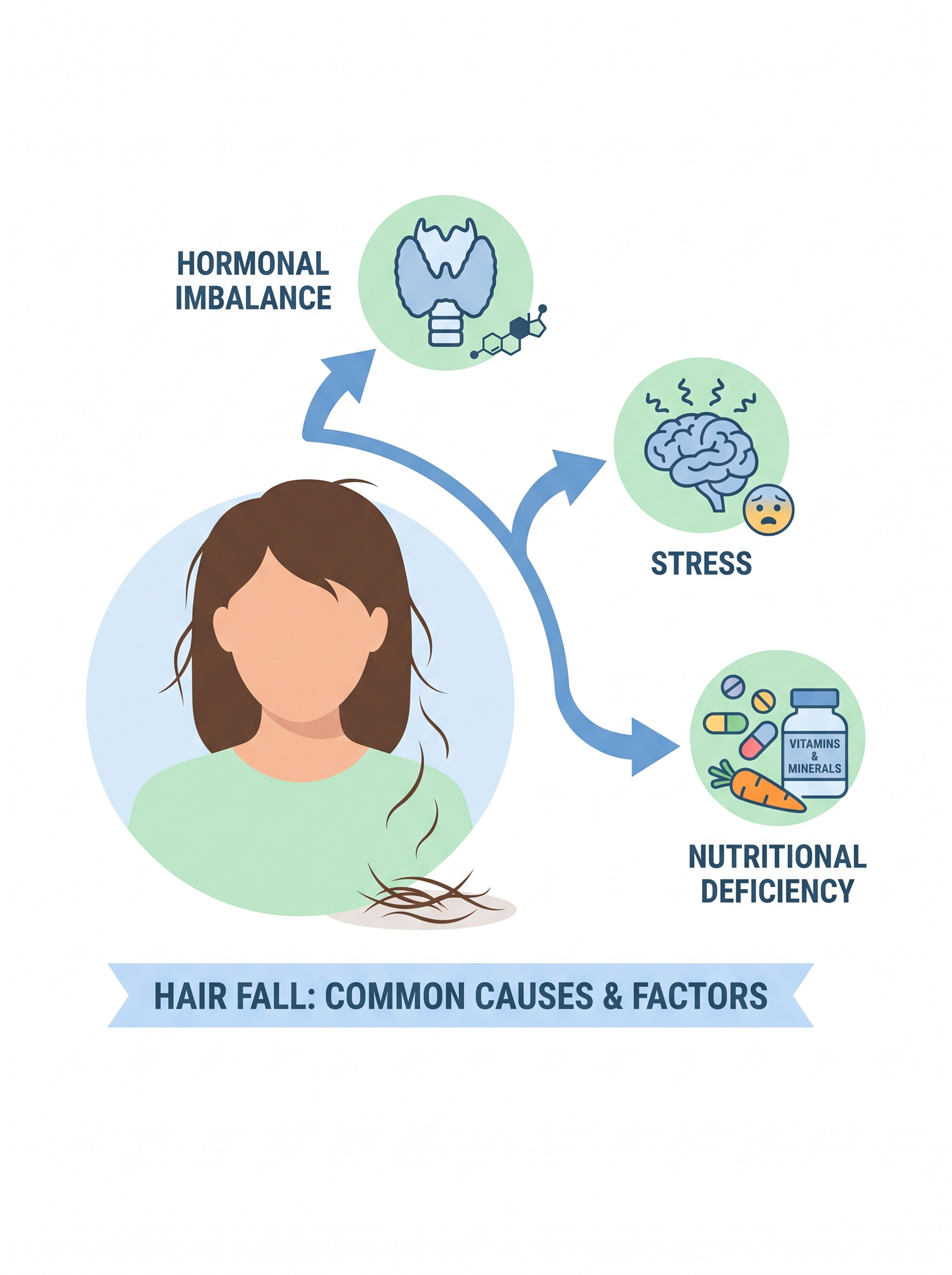
If you’re experiencing persistent shedding and wondering which doctor to consult for symptoms like hair fall, the answer isn’t always just a dermatologist. Hair loss can be linked to hormonal imbalance, chronic stress, or nutritional deficiencies—conditions that require the right specialist for proper diagnosis.
Why Hair Fall Should Not Be Ignored
Occasional hair fall is normal. But if you notice:
- Excessive hair on your pillow or comb
- Sudden thinning or bald patches
- Hair fall lasting more than a few weeks
👉 It’s time to stop guessing and start identifying the root cause.
Ignoring these signs can delay treatment and worsen the condition.
What Causes Hair Fall? (And What It Really Means)
Is hair fall a sign of hormonal imbalance?
Yes—this is one of the most common hidden causes.
Hormonal issues like:
- Thyroid disorders
- PCOS (Polycystic Ovary Syndrome)
- Post-pregnancy hormonal shifts
👉 These can disrupt your hair growth cycle.
Which doctor to consult?
➡️ Endocrinologist or Gynecologist
Can stress cause hair fall?
Absolutely.
Physical or emotional stress can trigger a condition called telogen effluvium, leading to sudden hair shedding.
Common triggers:
- Work pressure
- Illness or surgery
- Lack of sleep
Which specialist should I see?
➡️ General Physician (first step)
➡️ May refer to a specialist if needed
Does nutritional deficiency lead to hair loss?
Yes—and it’s often overlooked.
Hair needs proper nutrients to grow. Deficiencies in:
- Iron
- Vitamin D
- Vitamin B12
- Protein
👉 Can cause weak, thinning hair.
Which doctor to consult for symptoms like this?
➡️ General Physician or Nutritionist
Quick Guide: Hair Fall → Right Specialist
| Possible Cause | Symptoms | Which Doctor to Consult |
|---|---|---|
| Hormonal imbalance | Irregular periods, weight changes | Endocrinologist / Gynecologist |
| Stress-related | Sudden hair shedding, fatigue | General Physician |
| Nutritional deficiency | Weak hair, tiredness | General Physician / Nutritionist |
| Scalp issues | Dandruff, itching, infections | Dermatologist |
How to Choose the Right Specialist for Hair Fall
What doctor should I see for hair fall first?
Start with a general physician if you’re unsure.
They can guide you based on symptoms and refer you to the right specialist.
When should you see a dermatologist directly?
If you notice:
- Scalp infections
- Severe dandruff
- Patchy hair loss
👉 A dermatologist is the right choice.
When is hair fall a serious health warning?
Don’t ignore hair loss if it’s combined with:
- Sudden weight gain or loss
- Irregular menstrual cycles
- Chronic fatigue
- Weak immunity
👉 These may indicate deeper medical conditions.
Common Mistakes People Make
❌ Using random hair products without diagnosis
❌ Ignoring underlying health issues
❌ Taking supplements without testing
❌ Delaying doctor consultation
👉 Hair fall treatment without identifying the cause rarely works.
Why You Need a Multi-Specialty Approach
Hair fall isn’t always a single-department issue.
A multi-specialty hospital can help you:
- Get accurate diagnosis through tests
- Consult multiple specialists if needed
- Treat the root cause—not just symptoms
👉 This ensures faster and more effective recovery.
Final Takeaway: Hair Fall Is a Symptom, Not the Problem
If you’re experiencing hair fall, don’t treat it as just a cosmetic concern.
- It could be hormonal
- It could be stress-related
- It could be nutritional
👉 The key is identifying the cause and consulting the right specialist early.
Stop guessing. Get a proper diagnosis. Start the right treatment.
FAQs
1. Which doctor to consult for symptoms like hair fall?
Start with a general physician, then visit a dermatologist, endocrinologist, or gynecologist based on the cause.
2. Is hair fall always related to stress?
No. It can also be due to hormonal imbalance or nutritional deficiencies.
3. Can hair fall be reversed?
Yes, in many cases—if the root cause is identified and treated early.
4. Should I take supplements for hair fall?
Only after proper medical testing and consultation.
5. When should I worry about hair loss?
If it’s sudden, excessive, or combined with other symptoms like fatigue or hormonal changes.
Leave a Reply