
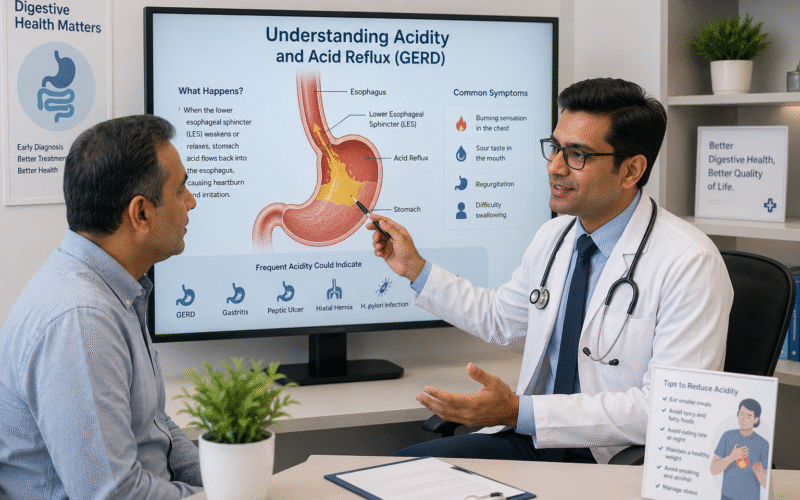
Acidity is one of the most common digestive complaints, and almost everyone experiences it occasionally after eating spicy foods, overeating, or lying down too soon after a meal. However, frequent acidity is different. If you find yourself reaching for antacids several times a week or living with persistent heartburn, it may be your body’s way of signaling an underlying digestive problem.
While occasional acidity is usually harmless, recurring symptoms can indicate conditions ranging from acid reflux to more serious gastrointestinal diseases that require medical attention. Understanding the warning signs can help you seek timely treatment and prevent complications.
What Is Acidity?
Acidity occurs when stomach acid flows backward into the esophagus, causing a burning sensation in the chest or throat, commonly known as heartburn. This happens when the lower esophageal sphincter (LES), the muscle that prevents stomach contents from moving upward, becomes weak or relaxes inappropriately.
Occasional episodes are normal, but frequent acidity occurring two or more times per week should not be ignored.
Common Causes of Frequent Acidity
Several lifestyle and dietary factors contribute to recurring acidity, including:
- Eating spicy, oily, or fried foods
- Excessive tea, coffee, or carbonated drinks
- Smoking and alcohol consumption
- Obesity
- Eating large meals
- Sleeping immediately after dinner
- Stress and anxiety
- Certain medications
Although these triggers are common, persistent symptoms often point toward an underlying digestive disorder.
Could Frequent Acidity Be a Sign of GERD?
Yes. One of the most common causes of persistent acidity is Gastroesophageal Reflux Disease (GERD).
GERD develops when acid repeatedly flows back into the esophagus, causing inflammation and irritation.
Symptoms of GERD
- Frequent heartburn
- Sour taste in the mouth
- Regurgitation of food or acid
- Chest discomfort
- Difficulty swallowing
- Chronic cough
- Hoarseness
- Sore throat
Without treatment, GERD can damage the lining of the esophagus.
What Other Digestive Disorders Can Cause Frequent Acidity?
Frequent acidity may also be associated with several gastrointestinal conditions.
Gastritis
Inflammation of the stomach lining caused by infections, medications, alcohol, or stress can lead to persistent burning, nausea, and stomach discomfort.
Peptic Ulcers
Ulcers in the stomach or upper small intestine often cause burning pain that may worsen on an empty stomach.
Hiatal Hernia
A hiatal hernia occurs when part of the stomach moves upward through the diaphragm, increasing the risk of acid reflux.
Helicobacter pylori Infection
This bacterial infection damages the stomach lining and is a major cause of gastritis and ulcers.
Functional Dyspepsia
Some individuals experience chronic upper abdominal discomfort without an obvious structural cause.
Can Frequent Acidity Indicate Serious Gastrointestinal Conditions?
Although uncommon, long-term acidity may sometimes signal more serious conditions.
Barrett’s Esophagus
Repeated acid exposure can change the cells lining the esophagus, increasing the risk of esophageal cancer.
Esophageal Strictures
Chronic inflammation can narrow the esophagus, making swallowing difficult.
Esophageal Cancer
Persistent acid reflux lasting many years, particularly when associated with difficulty swallowing or weight loss, requires immediate medical evaluation.
Early diagnosis significantly improves treatment outcomes.
What Symptoms Should Never Be Ignored?
Seek medical attention promptly if acidity is accompanied by:
- Difficulty swallowing
- Vomiting blood
- Black stools
- Persistent vomiting
- Severe chest pain
- Unexplained weight loss
- Loss of appetite
- Anemia
- Symptoms lasting more than a few weeks despite medication
These symptoms may indicate a more serious digestive condition.
How Is Frequent Acidity Diagnosed?
A gastroenterologist may recommend one or more of the following investigations:
Upper GI Endoscopy
Allows direct visualization of the esophagus, stomach, and upper intestine.
H. pylori Testing
Breath, stool, or biopsy tests can detect bacterial infection.
Esophageal pH Monitoring
Measures acid exposure in the esophagus over 24 hours.
Esophageal Manometry
Evaluates the function of the muscles involved in swallowing.
These tests help identify the exact cause of recurring acidity.
Treatment Options for Frequent Acidity
Treatment depends on the underlying diagnosis.
Lifestyle Changes
- Eat smaller meals
- Avoid late-night eating
- Maintain a healthy weight
- Limit spicy and fatty foods
- Reduce caffeine and alcohol
- Stop smoking
- Elevate the head of the bed
- Manage stress
Medications
Doctors may prescribe:
- Antacids
- H2 receptor blockers
- Proton pump inhibitors (PPIs)
- Antibiotics for H. pylori infection
Always use medications under medical supervision, especially if symptoms persist.
Surgical Treatment
Patients with severe GERD or anatomical abnormalities such as hiatal hernia may benefit from minimally invasive surgical procedures when medical therapy is insufficient.
Can Frequent Acidity Be Prevented?
Many cases can be reduced through healthy habits:
- Eat balanced meals
- Stay physically active
- Avoid overeating
- Drink enough water
- Maintain a healthy body weight
- Avoid lying down immediately after meals
- Identify and avoid personal food triggers
- Schedule regular health check-ups if symptoms recur
When Should You See a Gastroenterologist?
Consult a gastroenterologist if:
- Acidity occurs more than twice a week
- Symptoms interfere with daily activities
- Over-the-counter medications provide only temporary relief
- You experience alarm symptoms such as difficulty swallowing or weight loss
- Symptoms continue for several weeks
Early evaluation helps identify underlying digestive disorders before complications develop.
Conclusion
Occasional acidity is usually harmless, but frequent acidity should never be dismissed as a routine inconvenience. Persistent heartburn can be an early warning sign of conditions such as GERD, gastritis, peptic ulcers, hiatal hernia, or, in rare cases, more serious gastrointestinal diseases.
The good news is that most digestive disorders can be effectively managed with timely diagnosis, lifestyle modifications, and appropriate treatment. If you experience recurring acidity or concerning digestive symptoms, consult a qualified gastroenterologist for a comprehensive evaluation. Early care can protect your digestive health and improve your quality of life.
Leave a Reply