
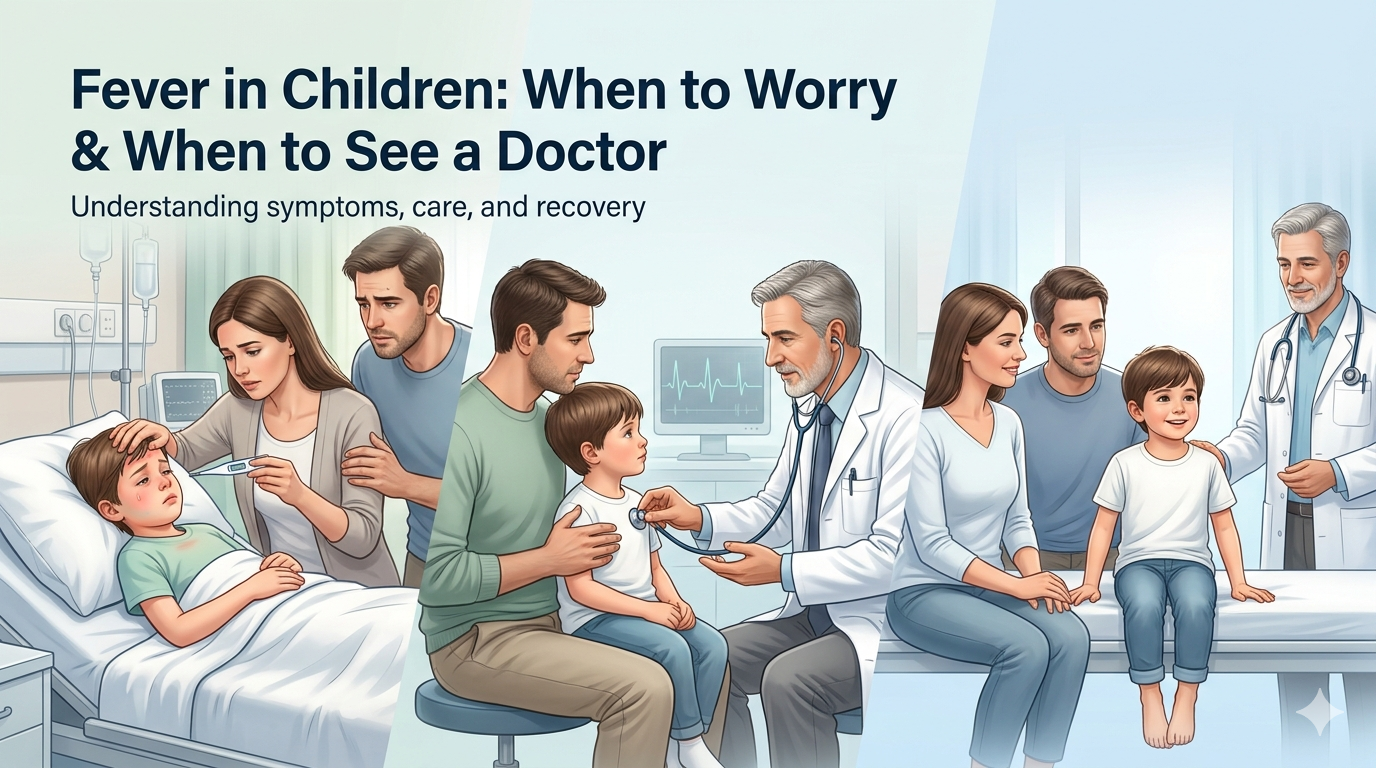
Fever in children can be stressful for parents. While most fevers are part of the body’s natural defense system, some situations need immediate medical attention. Understanding child fever: when should you worry can help you act at the right time and avoid complications.
This guide is designed to help parents make informed decisions and know exactly when to seek care at Noble Hospital Kundli.
🤒 What Is Fever in Children?
Fever is a rise in body temperature, usually due to infection. It is the body’s way of fighting viruses or bacteria.
- Normal temperature: around 98.6°F (37°C)
- Fever: 100.4°F (38°C) or higher
Not every fever is dangerous—but knowing child fever: when should you worry is essential for every parent.
✅ When Fever Is Usually NOT Serious
In many cases, fever can be managed at home.
Common mild causes:
- Viral infections
- Common cold or flu
- Mild throat infections
- Post-vaccination response
If your child is:
- Active and responsive
- Drinking fluids
- Eating normally
👉 The fever is usually not serious.
🚨 Child Fever: When Should You Worry?
This is the most important question for parents.
You should seek immediate medical care at Noble Hospital Kundli if your child shows any of the following:
🔴 High Fever
- Temperature above 102–103°F
- Not reducing with medication
🔴 Fever in Infants
- Any fever in babies below 3 months
🔴 Persistent Fever
- Lasting more than 2–3 days
🔴 Serious Warning Signs
- Difficulty breathing
- Continuous vomiting
- Seizures (fits)
- Unusual drowsiness or weakness
- Skin rash with fever
👉 These are clear signs of child fever: when should you worry and require urgent medical evaluation.
⚠️ Before: Common Mistakes Parents Make
In many cases, delays happen because parents underestimate symptoms.
❗ Common mistakes:
- Ignoring fever for several days
- Self-medicating without proper guidance
- Assuming it’s “just viral”
- Delaying professional consultation
These delays can lead to complications—especially in young children.
🏥 Timely Care at Noble Hospital Kundli
Understanding child fever: when should you worry is only the first step—acting on it is what matters.
At Noble Hospital Kundli, children receive prompt and accurate care:
⚡ Quick Diagnosis
- Temperature and symptom evaluation
- Physical examination
- Required lab tests
👩⚕️ Expert Pediatric Management
- Identification of infection cause
- Safe and effective treatment
🛏️ Monitoring & Support
- Close observation for serious cases
👉 Early treatment at Noble Hospital Kundli helps prevent complications and ensures faster recovery.
💙 After: Safe Recovery with Proper Treatment
With timely care, most children recover quickly.
✅ After Treatment:
- Fever reduces within a few days
- Child regains energy
- Appetite improves
- Normal activity resumes
This clearly shows why recognizing child fever: when should you worry is so important.
🧠 Tips for Parents: Managing Fever at Home
While observing your child:
- Keep them hydrated
- Use medicines only as prescribed
- Ensure proper rest
- Monitor temperature regularly
👉 If symptoms worsen, visit Noble Hospital Kundli immediately.
📍 Why Parents Trust Noble Hospital Kundli
Noble Hospital Kundli is trusted for:
- Experienced pediatric care
- Emergency support for children
- Accurate diagnosis and treatment
- Child-friendly medical approach
This makes Noble Hospital Kundli a reliable choice when dealing with child fever: when should you worry situations.
🚨 Don’t Take Risks with Your Child’s Health
Fever may seem common—but in some cases, it can signal serious illness.
👉 If you’re unsure, don’t delay.
Visit Noble Hospital Kundli or book a consultation today to ensure your child’s safety.
❓ FAQs – Child Fever
❓ What temperature is dangerous for a child?
Fever above 102–103°F or persistent fever requires medical attention.
❓ When should I take my child to the hospital?
If fever lasts more than 2–3 days or includes symptoms like vomiting, breathing difficulty, or seizures.
❓ Is fever always serious?
No, but the cause of fever can sometimes be serious.
❓ Can fever be treated at home?
Mild fever can be managed at home, but warning signs require doctor consultation.
❓ Why is early treatment important?
Early diagnosis prevents complications and ensures faster recovery.
Leave a Reply