
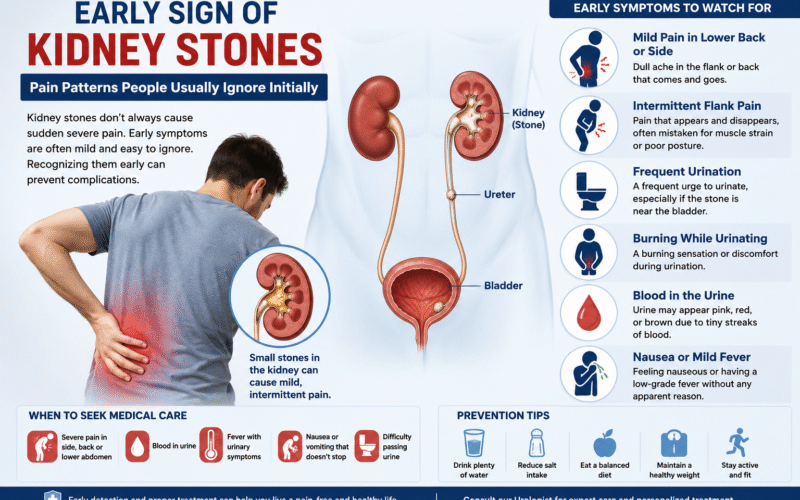
Kidney stones are among the most common urinary tract disorders, affecting millions of people worldwide. While many associate kidney stones with sudden, unbearable pain, the early sign of kidney stones is often much more subtle. Mild discomfort, changes in urination, or intermittent pain can easily be mistaken for muscle strain, dehydration, or digestive issues.
Recognizing these warning signs early can help prevent complications such as urinary tract infections, kidney damage, or the need for emergency treatment. In this article, we’ll explain the early symptoms of kidney stones, the pain patterns people commonly ignore, and when it’s time to seek medical care.
What Are Kidney Stones?
Kidney stones are hard deposits made of minerals and salts that form inside the kidneys. They develop when urine becomes concentrated, allowing minerals such as calcium, oxalate, and uric acid to crystallize.
Common risk factors include:
- Inadequate water intake
- High-sodium diet
- Excessive animal protein consumption
- Obesity
- Family history of kidney stones
- Certain medical conditions and medications
Early Sign of Kidney Stones You Should Never Ignore
1. Mild Pain in the Lower Back or Side
One of the earliest symptoms is a dull ache in the lower back, flank, or side. Unlike the intense pain of a large stone, early discomfort may come and go, making many people ignore it.
The pain often affects one side of the body and may worsen after physical activity or prolonged sitting.
2. Intermittent Flank Pain
Small kidney stones may shift slightly within the kidney, causing intermittent pain rather than continuous discomfort.
Many individuals mistake this for:
- Muscle strain
- Poor posture
- Back pain
- Kidney fatigue
Ignoring recurring flank pain may delay diagnosis.
Pain Patterns People Usually Ignore Initially
Why Does Kidney Stone Pain Come and Go?
As a stone moves inside the urinary tract, it temporarily blocks urine flow before shifting again. This causes pain that appears suddenly and then disappears.
Common pain patterns include:
- Sharp pain lasting several minutes
- Dull ache throughout the day
- Pain after dehydration
- Pain after exercise
- Pain during long travel
These episodes are often dismissed because they improve on their own.
Pain That Moves to the Lower Abdomen or Groin
As the stone travels toward the ureter, discomfort may shift from the back to the lower abdomen or groin.
This moving pain is a classic indicator that the stone is progressing through the urinary tract.
Early Urinary Symptoms of Kidney Stones
Frequent Urination
A kidney stone approaching the bladder may create the urge to urinate more often than usual.
Burning While Urinating
Many people assume burning urination always means a urinary tract infection. However, kidney stones can also irritate the urinary tract.
Blood in the Urine
Tiny amounts of blood may make urine appear:
- Pink
- Red
- Brown
- Rust-colored
Even microscopic blood detected during a urine test can indicate kidney stones.
Cloudy or Foul-Smelling Urine
Changes in urine appearance or odor may suggest irritation or an associated infection that requires prompt medical attention.
Other Early Symptoms That Often Go Unnoticed
Nausea Without an Obvious Cause
The kidneys and digestive system share nerve pathways, meaning kidney stones can trigger nausea even before severe pain develops.
Mild Fever
A fever alongside urinary symptoms may indicate an infection, requiring urgent medical evaluation.
Difficulty Passing Urine
Partial blockage by a kidney stone may reduce urine flow or make urination uncomfortable.
Who Is at Higher Risk?
Individuals with these risk factors should be especially alert to the early sign of kidney stones:
- Previous kidney stones
- Family history
- Diabetes
- Obesity
- Low water intake
- High-salt diet
- High-protein diet
- Chronic dehydration
When Should You Visit a Hospital?
Seek immediate medical care if you experience:https://noblehospitalkundli.com/
- Severe side or back pain
- Blood in urine
- Fever with urinary symptoms
- Persistent vomiting
- Difficulty passing urine
- Pain that continues for several hours
Early diagnosis allows for less invasive treatment and reduces the risk of complications.
How Are Kidney Stones Diagnosed?
Doctors may recommend:
- Urine analysis
- Blood tests
- Ultrasound
- CT scan
- X-ray (in selected cases)
Accurate diagnosis helps determine the stone’s size, location, and appropriate treatment plan.
Treatment Options
Treatment depends on the size and location of the stone.
Small Kidney Stones
Management often includes:
- Drinking plenty of water
- Pain-relieving medication
- Medicines to help pass the stone
- Dietary modifications
Larger https://noblehospitalkundli.com/Kidney Stones
Hospital-based treatment may include:
- Extracorporeal Shock Wave Lithotripsy (ESWL)
- Ureteroscopy with laser lithotripsy
- Percutaneous Nephrolithotomy (PCNL)
- Minimally invasive surgical procedures
How to Prevent Kidney Stones
Simple preventive measures include:
- Drink 2.5–3 litres of water daily.
- Reduce salt intake.
- Eat a balanced diet rich in fruits and vegetables.
- Maintain a healthy body weight.
- Limit sugary beverages.
- Follow medical advice if you’ve had kidney stones before.
https://noblehospitalkundli.com/Frequently Asked Questions
What is the earliest sign of kidney stones?
The earliest sign of kidney stones is often mild flank or lower back pain, along with subtle urinary changes such as increased frequency or burning during urination.
Can kidney stones cause pain without severe symptoms?
Yes. Small kidney stones may produce mild, intermittent pain before causing severe renal colic.
Does kidney stone pain come and go?
Yes. Pain often fluctuates as the stone moves through the urinary tract and temporarily blocks urine flow.
Can kidney stones be treated without surgery?
Many small kidney stones pass naturally with hydration, medication, and medical supervision. Larger stones may require minimally invasive procedures.
When should I see a doctor?
Consult a healthcare professional if you experience persistent flank pain, blood in the urine, fever, difficulty urinating, or severe pain.
Conclusion
The early sign of kidney stones is often subtle and easy to overlook. Mild flank pain, changing pain patterns, urinary symptoms, and occasional discomfort may seem insignificant but can indicate the beginning of a kidney stone. Early diagnosis and treatment help prevent complications and improve outcomes.
If you notice persistent urinary symptoms or recurring side pain, consult a qualified urologist promptly. Early evaluation can make treatment simpler, safer, and more effective.
Leave a Reply