
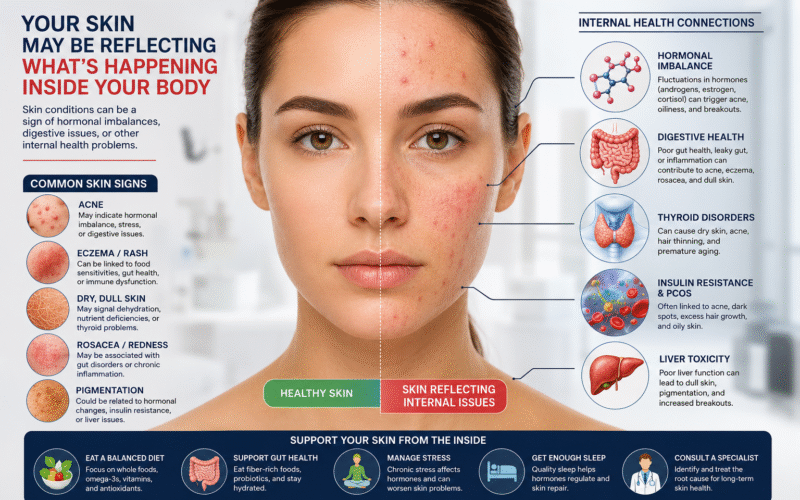
Skin is the body’s largest organ and often serves as a visible indicator of overall health. While many people treat acne, rashes, or pigmentation with topical creams alone, these hormonal skin problems may actually signal underlying health concerns related to hormones, digestion, nutrition, or chronic illness.
Understanding the connection between your skin and internal health can help identify the root cause of persistent skin conditions and lead to more effective, long-term treatment.
How Hormonal Skin Problems Affect Your Skin
Hormones regulate numerous bodily functions, including oil production, inflammation, and skin cell turnover. Even slight hormonal imbalances can trigger noticeable changes in the skin.
What are the common signs of hormonal skin problems?
Common symptoms include:
- Persistent acne along the jawline and chin
- Oily skin
- Painful cystic acne
- Excess facial hair
- Dark patches of skin
- Hair thinning or hair loss
- Irregular breakouts during menstrual cycles
Hormonal fluctuations during puberty, pregnancy, menopause, or conditions such as Polycystic Ovary Syndrome (PCOS) can significantly affect skin health.
Which hormones commonly cause skin issues?
Several hormones influence skin health, including:
- Androgens
- Estrogen
- Progesterone
- Cortisol (stress hormone)
- Thyroid hormones
- Insulin
An imbalance in any of these hormones may contribute to acne, pigmentation, dryness, or excessive oil production.
The Connection Between Digestive Health and Skin
Growing research highlights a strong relationship between the gut and the skin, often referred to as the gut-skin axis. Digestive health influences immune function, inflammation, and nutrient absorption, all of which directly affect skin appearance.
Can digestive problems cause skin conditions?
Yes. Poor digestive health may contribute to:
- Acne
- Rosacea
- Eczema
- Psoriasis
- Chronic inflammation
- Sensitive skin
An unhealthy gut microbiome may increase systemic inflammation, which can worsen existing skin disorders.
How does gut health affect your skin?
Healthy digestion supports:
- Better nutrient absorption
- Balanced immune responses
- Reduced inflammation
- Stronger skin barrier function
- Healthy collagen production
Maintaining gut health through a balanced diet, hydration, and adequate fiber intake may improve overall skin wellness.
Skin Conditions That May Reflect Internal Health Issues
Certain skin changes can be early indicators of underlying medical conditions.
Acne
Persistent acne may indicate:
- Hormonal imbalance
- PCOS
- Insulin resistance
- Chronic stress
Dry Skin
Severely dry skin may be associated with:
- Thyroid disorders
- Nutritional deficiencies
- Dehydration
Dark Pigmentation
Darkened skin around the neck or underarms may suggest insulin resistance or metabolic disorders.
Rosacea
Rosacea has been linked to gastrointestinal disorders and chronic inflammation in some individuals.
Eczema
Eczema may worsen due to food sensitivities, gut imbalance, allergies, or immune system dysfunction.
When Should You See a Dermatologist?
Seek medical evaluation if you experience:
- Acne that does not improve with standard skincare
- Sudden skin changes without an obvious cause
- Frequent flare-ups
- Severe itching or inflammation
- Skin symptoms accompanied by weight changes, fatigue, or irregular menstrual cycles
A dermatologist may recommend blood tests or collaborate with endocrinologists or gastroenterologists when an underlying condition is suspected.
How to Improve Skin Health from the Inside
Supporting your internal health can positively impact your skin.
Follow a Nutrient-Rich Diet
Eat foods rich in:
- Fruits and vegetables
- Lean protein
- Healthy fats
- Whole grains
- Omega-3 fatty acids
Support Digestive Health
Maintain a healthy gut by:
- Eating fiber-rich foods
- Staying hydrated
- Including fermented foods when appropriate
- Managing stress
- Getting adequate sleep
Manage Hormonal Balance
Lifestyle habits that support hormonal health include:
- Regular exercise
- Healthy body weight
- Consistent sleep schedule
- Stress reduction techniques
- Medical evaluation for persistent hormonal symptoms
Follow a Proper Skincare Routine
Use dermatologist-recommended products suitable for your skin type and avoid excessive use of harsh exfoliants or irritating ingredients.
Frequently Asked Questions
Can hormonal skimo pales go away naturally?
Some hormonal skin problems improve as hormone levels stabilize. However, persistent or severe symptoms should be evaluated by a dermatologist to identify underlying causes and determine appropriate treatment.
Can digestive issues cause acne?
Yes. Poor gut health may contribute to inflammation, potentially worsening acne in some individuals. However, acne usually has multiple contributing factors, including hormones, genetics, and skincare habits.
What skin conditions are linked to internal health?
Conditions such as acne, eczema, rosacea, unexplained pigmentation, excessive dryness, and chronic rashes may sometimes reflect hormonal, digestive, metabolic, or autoimmune conditions.
Should I treat only the skin symptoms?
Topical treatments can help manage symptoms, but addressing underlying hormonal or digestive issues often leads to better long-term skin health.
Conclusion
Your skin often provides valuable clues about your overall health. Persistent hormonal skin problems, recurring acne, unexplained pigmentation, or inflammatory skin conditions may be more than cosmetic concerns—they can reflect hormonal imbalances, digestive disorders, nutritional deficiencies, or other internal health issues.
Rather than focusing solely on surface treatments, a comprehensive evaluation that considers both skin and overall health can help identify the underlying cause and guide effective management. If you notice ongoing or unusual skin changes, consulting a qualified dermatologist is the best step toward achieving healthier skin and improved well-being.
Leave a Reply