
Introduction
For many expecting mothers in Kundli and Sonipat, the thought of childbirth can bring a mix of excitement and fear. Questions like “Will it be painful?”, “What exactly happens during delivery?”, and “Is normal delivery safe?” are very common.
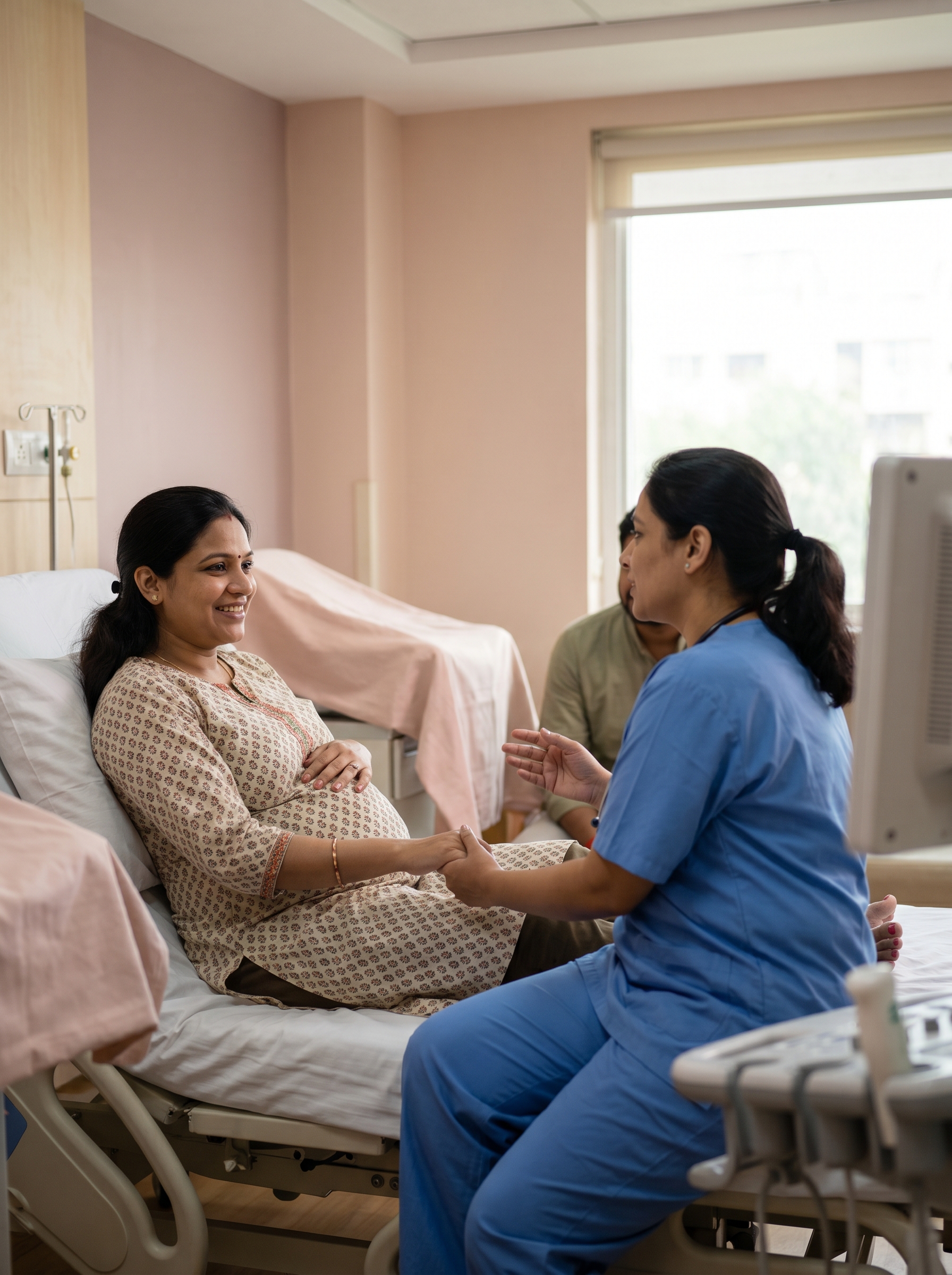
Doctors say that understanding the normal delivery process step by step can significantly reduce fear and anxiety.
Let’s walk through the entire journey in a simple, reassuring way—just like a doctor would explain to you.
What is Normal Delivery?
What does normal delivery mean?
Normal delivery (also called vaginal birth) is the natural process where a baby is born through the birth canal without surgical intervention.
It is considered the safest and most recommended method when there are no medical complications.
Step-by-Step Normal Delivery Process
Step 1: Early Labor (Starting Phase)
What happens in early labor?
- Mild contractions begin
- Cervix starts opening (dilating)
- Back pain or cramps may occur
- This phase can last several hours
👉 This is usually manageable at home in early stages, but doctor guidance is important.
Step 2: Active Labor (Intense Phase)
What happens during active labor?
- Contractions become stronger and more frequent
- Cervix opens from 4 cm to 10 cm
- Pain intensity increases
- Hospital admission is usually required
👉 Doctors and nurses closely monitor both mother and baby during this stage.
Step 3: Pushing & Baby Birth
How is the baby delivered?
- Once fully dilated, the mother starts pushing
- With each contraction, the baby moves downward
- Doctors guide breathing and pushing techniques
- The baby is delivered through the birth canal
👉 This is the most crucial stage, but also the most rewarding moment.
Step 4: Delivery of Placenta
What happens after the baby is born?
- Placenta is delivered within a few minutes
- Mild contractions continue briefly
- Doctors ensure everything is normal
👉 This completes the delivery process.
Why Understanding the Process Reduces Fear
How does knowledge help expecting mothers?
Fear often comes from the unknown.
When mothers understand:
- What each stage feels like
- What is normal vs. not
- That doctors are there at every step
…it creates confidence and reduces panic.
Tips to Prepare for a Smooth Normal Delivery
How can you increase chances of normal delivery?
Doctors often recommend:
- Regular prenatal checkups
- Light physical activity (like walking)
- Healthy, balanced diet
- Staying hydrated
- Practicing breathing exercises
- Avoiding unnecessary stress
Common Fears About Normal Delivery (And the Truth)
Is normal delivery extremely painful?
Yes, there is pain—but it is manageable and temporary. Doctors provide guidance and support throughout.
Is normal delivery risky?
For most healthy pregnancies, it is safe and preferred over surgery.
What if complications arise?
Doctors are trained to act quickly. If needed, they may recommend a C-section for safety.
When Should You Go to the Hospital?
What are the signs of labor?
- Regular contractions
- Water breaking
- Severe back pain
- Vaginal discharge or bleeding
👉 If you notice these, seek medical care immediately.
Importance of Choosing the Right Hospital
For expecting mothers in Kundli and Sonipat, choosing a hospital with:
- Experienced doctors
- 24/7 emergency care
- Maternity support
- Safe delivery facilities
…makes a huge difference in both safety and comfort.
Take the Fear Out of Childbirth
Childbirth is a natural process—and with the right guidance, it becomes a positive and empowering experience.
If you or your family member is expecting:
👉 Consult a qualified doctor for proper guidance, regular checkups, and a safe delivery plan.
FAQs – Normal Delivery Process
1. How long does normal delivery take?
It varies. First-time mothers may take longer (8–12 hours), while others may have shorter labor.
2. Can I choose normal delivery over C-section?
Yes, if there are no medical complications, doctors usually encourage normal delivery.
3. Is walking helpful before delivery?
Yes, light walking can help improve stamina and support natural labor.
4. How can I reduce fear of delivery?
Understanding the process, attending prenatal checkups, and talking to doctors helps reduce anxiety.
5. Is hospital support important during delivery?
Absolutely. Proper medical supervision ensures safety for both mother and baby.
Get Direction
Address:- Block-A, TDI, TDI City, Club Rd, Sector- 58, Kundli, Sonipat, Haryana 131030
Contact no:- +91 8397003030
Website:- https://www.noblehospitalkundli.com/
Leave a Reply