
Introduction
Most serious dental problems don’t start with pain—they start with small, ignored habits.
Poor oral hygiene habits build up silently over time, eventually leading to long-term dental and gum health issues like cavities, gum disease, bad breath, and even tooth loss.
What makes this worse is that these habits feel normal. Skipping brushing once, ignoring flossing, or delaying dental visits doesn’t seem harmful—until the damage becomes permanent.
Understanding these habits early can help you prevent costly and painful dental treatments later.
Why Poor Oral Hygiene Habits Are Dangerous
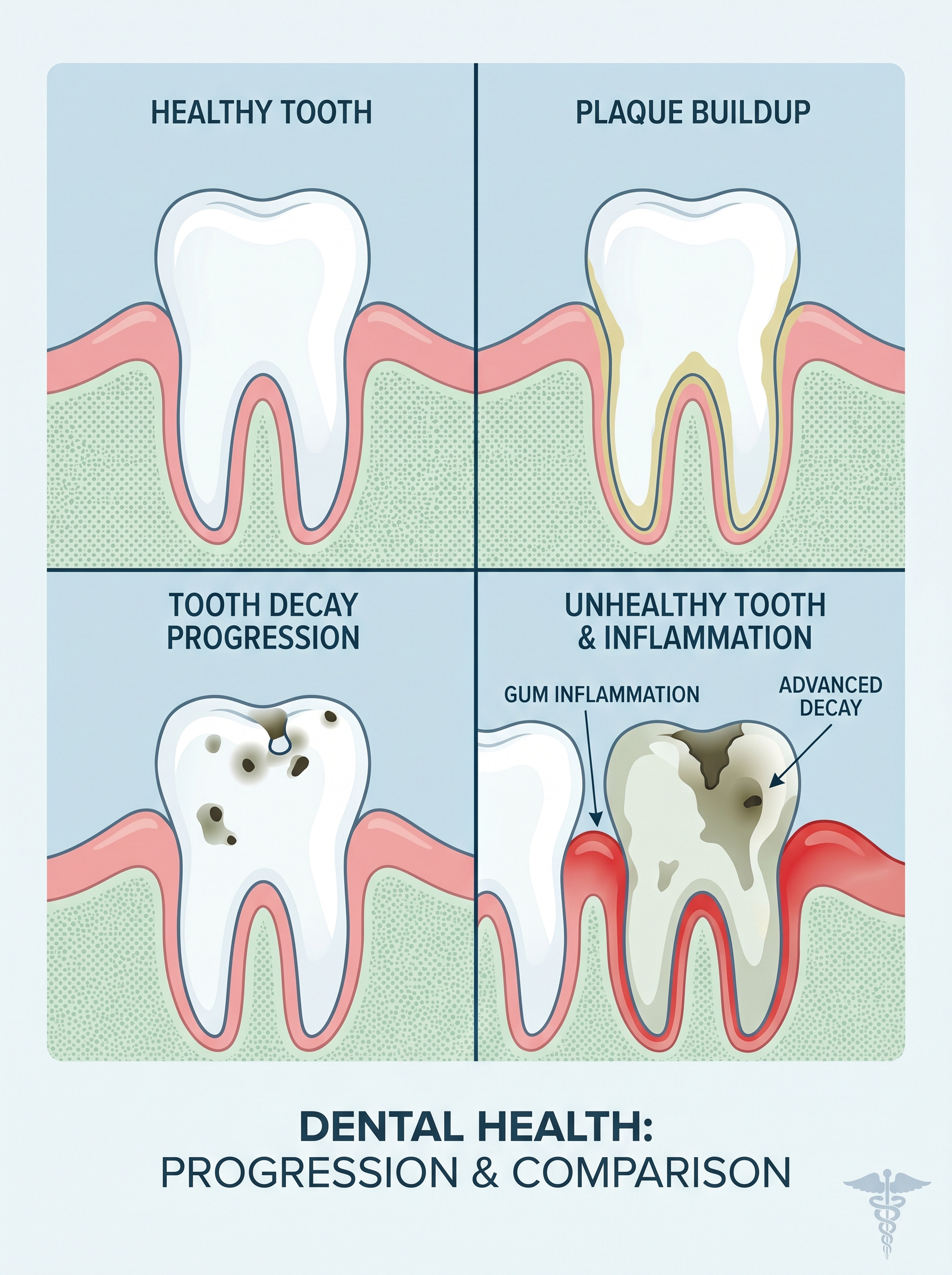
Oral health problems don’t appear overnight. They develop gradually due to:
- Plaque buildup
- Bacterial growth
- Gum inflammation
- Tooth enamel damage
The biggest mistake people make is waiting for pain before taking action. By then, the problem is often advanced.
Common Poor Oral Hygiene Habits That Damage Your Teeth and Gums
1. Brushing Only Once a Day (or Skipping It Sometimes)
Why people ignore this
- “I brushed yesterday” mindset
- Busy routine
- Assuming once is enough
Long-term impact
- Plaque accumulation
- Tooth decay
- Increased risk of gum disease
Brushing twice daily is the most basic yet most ignored dental care habit.
2. Not Flossing Regularly
What most people think
“Brushing is enough.”
Reality
Flossing removes food particles and plaque between teeth—areas your toothbrush cannot reach.
Consequences
- Gum inflammation
- Bleeding gums
- Periodontal disease
3. Ignoring Bleeding Gums
Bleeding while brushing or flossing is not normal—it’s an early warning sign.
What it indicates
- Gum infection
- Gingivitis (early gum disease)
Why it gets ignored
People assume they brushed too hard.
Ignoring this can lead to severe gum damage over time.
4. Frequent Consumption of Sugary Foods and Drinks
Hidden danger
Sugar feeds harmful bacteria in your mouth.
Long-term effects
- Tooth decay
- Enamel erosion
- Increased cavity risk
Frequent snacking without cleaning teeth worsens the damage.
5. Not Replacing Your Toothbrush on Time
Common mistake
Using the same toothbrush for months.
Why it’s harmful
- Worn-out bristles don’t clean effectively
- Bacteria buildup on the brush
Dentists recommend replacing your toothbrush every 3 months.
6. Brushing Too Hard
This is a surprising but common mistake.
What people think
Hard brushing = better cleaning
Actual result
- Enamel damage
- Gum recession
- Tooth sensitivity
Gentle, proper technique is far more effective.
7. Skipping Regular Dental Checkups
Why people delay
- No visible pain
- Fear or cost concerns
What happens
- Small issues go unnoticed
- Problems worsen silently
Regular checkups help detect issues early before they become serious.
Early Signs of Dental and Gum Health Issues
Just like kidney problems, dental issues also show early warning signs that people ignore.
Watch out for:
- Bad breath that doesn’t go away
- Bleeding or swollen gums
- Tooth sensitivity
- Yellowing or plaque buildup
- Pain while eating
Ignoring these symptoms leads to long-term dental and gum health issues.
Long-Term Effects of Poor Oral Hygiene
If these habits continue, they can lead to:
- Cavities and tooth decay
- Gum disease (gingivitis → periodontitis)
- Tooth loss
- Persistent bad breath
- Increased treatment costs
In severe cases, gum disease can even affect overall health.
How to Improve Your Oral Hygiene Habits
Simple but effective steps:
- Brush twice daily using proper technique
- Floss at least once a day
- Use an antibacterial mouthwash
- Limit sugary food and drinks
- Replace your toothbrush regularly
- Visit a dentist every 6 months
Consistency is more important than intensity.
When to See a Dentist
Don’t wait for severe pain. Consult a dentist if you notice:
- Bleeding gums
- Persistent bad breath
- Tooth pain or sensitivity
- Swollen or receding gums
Early treatment prevents long-term complications and expensive procedures.
Take Control of Your Oral Health Today
Your daily habits decide your long-term dental health.
👉 Small improvements today can prevent major treatments tomorrow
👉 Early care saves both money and discomfort
Book a dental consultation and ensure your teeth and gums stay healthy for years to come.
FAQs – Poor Oral Hygiene Habits
What are the most common poor oral hygiene habits?
Skipping brushing, not flossing, ignoring bleeding gums, and excessive sugar intake are the most common.
Can poor oral hygiene cause serious problems?
Yes, it can lead to cavities, gum disease, tooth loss, and long-term dental issues.
How often should I brush and floss?
Brush twice daily and floss at least once a day for optimal oral health.
Is bleeding gums a serious issue?
Yes, it is an early sign of gum disease and should not be ignored.
How can I prevent gum disease?
Maintain good oral hygiene, reduce sugar intake, and visit a dentist regularly.
Get Direction
Address:- Block-A, TDI, TDI City, Club Rd, Sector- 58, Kundli, Sonipat, Haryana 131030
Contact no:- +91 8397003030
Website:- https://www.noblehospitalkundli.com/
Leave a Reply