
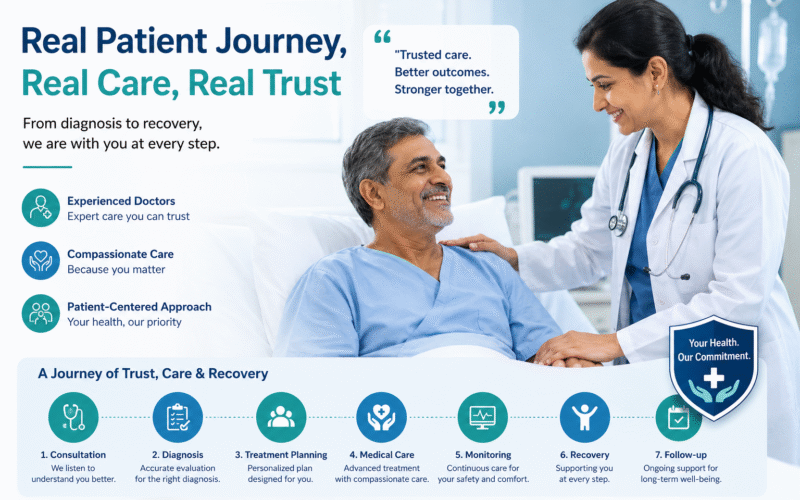
When a person walks into a hospital, they rarely bring only a medical problem. They also bring questions, fear, uncertainty, and one important hope: “Will I get the right treatment?”
A real patient journey can show what hospital care actually looks like—from the first consultation and diagnosis to treatment, monitoring, and recovery. More importantly, it can help patients and families understand why choosing the right healthcare team matters.
It Started With a Concern
For many patients, the journey begins with symptoms that may initially seem manageable. Pain, weakness, breathing difficulties, persistent discomfort, or another health concern may gradually start affecting everyday life.
When the symptoms continue or become more difficult to manage, seeking professional medical advice becomes important.
In our patient journey, the first step was a detailed consultation. The healthcare team listened carefully to the patient’s concerns, reviewed the medical history, and recommended the necessary examinations and diagnostic tests.
This initial evaluation helped the doctors understand the underlying problem rather than simply treating the visible symptoms.
Accurate Diagnosis Makes a Difference
One of the most important stages of any treatment journey is diagnosis.
A proper diagnosis allows doctors to understand:
- What is causing the patient’s symptoms
- How serious the condition may be
- Whether additional investigations are required
- Which treatment options may be appropriate
- What risks and precautions need to be considered
The patient and family were guided through the findings in understandable language. Instead of leaving them confused by medical terminology, the healthcare team explained the condition and discussed the next steps.
Clear communication can be just as important as clinical expertise when building patient trust.
Choosing the Right Treatment
After evaluating the patient’s condition, the medical team developed an individualized treatment plan.
Treatment decisions should depend on several factors, including the patient’s condition, medical history, age, test results, and overall health. A treatment approach that works for one patient may not necessarily be appropriate for another.
The patient and family were informed about the treatment process, expected recovery, and important precautions. Having this information helped them participate more confidently in the treatment journey.
Care Doesn’t Stop After https://noblehospitalkundli.com/Treatment
Successful hospital care is not simply about completing a procedure or starting medication.
Monitoring and follow-up are equally important.
During the recovery period, the healthcare team continued to observe the patient’s progress, manage concerns, and provide guidance regarding medicines, diet, activity, wound care, or other relevant precautions.
This continued support helped the patient gradually return to normal activities.
The Human Side of Healthcare
Behind every successful treatment is more than medical equipment and technology.
There are doctors making clinical decisions, nurses monitoring patients, technicians conducting investigations, support staff helping families, and caregivers providing emotional support.
For patients, small things can make a significant difference:
- Having someone explain what is happening
- Getting answers to questions
- Knowing what to expect next
- Feeling heard and respected
- Receiving timely attention
- Having family members kept informed
These experiences can transform a stressful hospital visit into a more reassuring healthcare journey.
From Fear to Confidence
At the beginning of treatment, uncertainty is https://noblehospitalkundli.com/natural. Patients may worry about their diagnosis, treatment, recovery time, or possible complications.
But when patients receive appropriate medical evaluation, transparent communication, compassionate care, and consistent follow-up, confidence can gradually replace fear.
That is what makes a patient journey powerful—not simply the fact that treatment was completed, but the transformation from uncertainty to understanding and from anxiety to confidence.
Why Patient Stories Build Trust
People often want to know what healthcare feels like before choosing a hospital.
A genuine patient story can help them understand:
Consultation → Diagnosis → https://noblehospitalkundli.com/Treatment Planning → Medical Care → Monitoring → Recovery → Follow-up
However, patient experiences should always be shared responsibly. Hospitals should obtain appropriate consent and protect patient privacy before publishing any testimonial, photograph, video, or medical information. Treatment outcomes can also vary from patient to patient.
Choosing a Hospital Is About More Than Treatment
When selecting a hospital, patients should look beyond infrastructure alone.
Consider whether the hospital offers:
- Qualified medical professionals
- Appropriate diagnostic facilities
- Emergency and supportive services when required
- Clear communication with patients and families
- Proper monitoring and follow-up
- A patient-focused approach to care
The goal should be to find a healthcare environment where clinical care and compassion work together.
Conclusion
Every patient’s journey is different, but the foundation of good hospital care remains the same: careful diagnosis, appropriate treatment, continuous monitoring, clear communication, and compassion.
A successful patient journey is ultimately about more than overcoming a health problem. It is about helping patients feel informed, supported, and confident throughout their treatment.
Because trust in healthcare is built one patient, one conversation, and one positive experience at a time.
Leave a Reply