
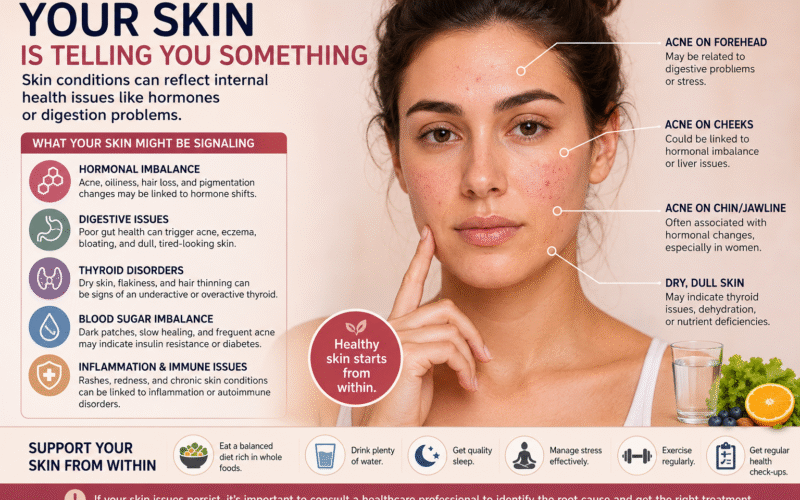
Your skin is more than just your body’s outer covering—it’s often a reflection of what’s happening inside. While many people treat skin concerns with creams or home remedies, recurring or persistent skin problems can sometimes be linked to underlying health conditions such as hormonal imbalances, digestive disorders, nutritional deficiencies, or chronic inflammation.
Instead of only treating the visible symptoms, it’s important to understand the root cause. Healthy skin often starts with a healthy body.
Your Skin Can Be an Early Warning Sign
Certain skin conditions may appear before you notice other health problems. Paying attention to these changes and seeking medical advice early can help identify hidden issues before they become more serious.
Here are some common examples:
1. Persistent Acne
Acne isn’t always caused by oily skin.
It may be linked to:
- Hormonal imbalance
- Polycystic Ovary Syndrome (PCOS)
- High stress levels
- Certain medications
- Poor dietary habits
Adult acne, especially around the jawline and chin, is often associated with hormonal changes.
2. Dry, Flaky Skin
If your skin remains dry despite using moisturizers, it could indicate:
- Thyroid disorders
- Dehydration
- Vitamin deficiencies
- Diabetes
- Poor nutrition
Persistent dryness deserves medical evaluation, particularly if accompanied by fatigue or weight changes.
3. Frequent Rashes or Itching
Repeated rashes may not simply be allergies.
Possible underlying causes include:
- Food intolerances
- Autoimmune disorders
- Liver conditions
- Chronic inflammation
- Certain medications
Identifying the trigger is https://noblehospitalkundli.com/essential for effective treatment.
4. Dark Patches on the Skin
Dark, velvety patches around the neck, underarms, or groin can sometimes be associated with:
- Insulin resistance
- Prediabetes or diabetes
- Obesity
- Hormonal disorders
Early screening can help prevent long-term complications.
5. Skin Pigmentation Changes
Sudden lightening or darkening of the skin may indicate:
- Vitamin deficiencies
- Hormonal changes
- Autoimmune conditions
- Certain metabolic disorders
A proper medical assessment can help determine the underlying cause.
How Digestion Affects Your Skin
Your digestive system and skin are closely connected.
When gut health is compromised, it may contribute to:
- Acne
- Eczema
- Rosacea
- Increased skin sensitivity
- Inflammation
Poor digestion can reduce nutrient absorption, making it difficult for your skin to repair and maintain its natural barrier.
Hormones https://noblehospitalkundli.com/Play a Major Role
Hormonal fluctuations influence:
- Oil production
- Skin hydration
- Pigmentation
- Hair growth
- Collagen production
Conditions affecting hormones, including thyroid disorders, PCOS, menopause, and pregnancy, often produce noticeable changes in the skin.
Healthy Habits That Support Better Skin
While medical treatment may be necessary for underlying conditions, healthy lifestyle choices also help improve skin health:
- Eat a balanced diet rich in fruits and vegetables.
- Stay well hydrated throughout the day.
- Prioritize quality sleep.
- Exercise regularly.
- Manage stress effectively.
- Avoid smoking and excessive alcohol consumption.
- Follow a gentle skincare routine suitable for your skin type.
- Schedule regular health check-ups if symptoms persist.
When Should You See a Doctor?
Seek medical advice if you notice:
- Acne that doesn’t improve with treatment
- Sudden or unexplained skin changes
- Persistent itching or rashes
- Dark patches appearing unexpectedly
- Skin problems accompanied by fatigue, weight changes, irregular periods, digestive issues, or excessive hair loss
A healthcare professional can evaluate whether your skin condition is linked to an underlying medical issue.
Final Thoughts
Your skin is often one of the first places your body signals that something may be wrong internally. Rather than treating every skin concern as a cosmetic issue, consider whether hormonal imbalances, digestive problems, or nutritional deficiencies could be contributing factors.
Early diagnosis and appropriate treatment can improve both your overall health and your skin. If your skin symptoms persist or worsen, consult a qualified healthcare professional for a comprehensive evaluation.
If you’d like, I can also Create a matching featured blog image, social media caption, and Pinterest banner for this article.
Leave a Reply