
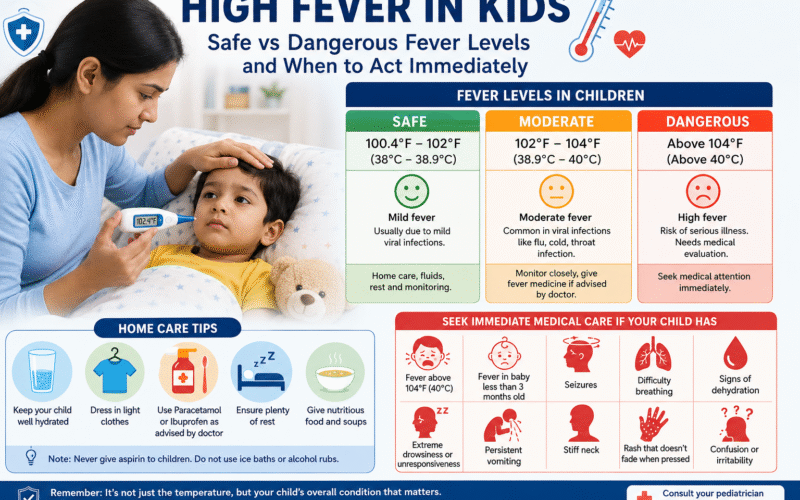
A fever is one of the most common reasons parents worry about their child’s health. While high fever in kids can be alarming, not every fever is dangerous. In most cases, fever is the body’s natural response to infections and helps fight viruses and bacteria.
- The real concern isn’t always the number on the thermometer—it’s your child’s age, symptoms, behavior, and how long the fever lasts. Knowing and a dangerous one can help you decide when home care is enough and when immediate medical attention is necessary.
What Is Considered a Fever in Children?
A child is generally considered to have a fever when their body temperature reaches:
- 100.4°F (38°C) or higher when measured rectally
- 100°F (37.8°C) or higher orally
- 99°F (37.2°C) or higher under the arm (less accurate)
Normal body temperature can vary slightly throughout the day.
Safe Fever Levels in Children
For most healthy children, these fever ranges are generally considered manageable with proper monitoring.
| Temperature | What It Usually Means | What You Should Do |
|---|---|---|
| 100.4–102°F (38–38.9°C) | Mild fever | Encourage fluids, rest, and monitor symptoms |
| 102–104°F (38.9–40°C) | Moderate fever | Continue monitoring and use fever medicine if recommended |
| Up to 104°F | Often caused by viral infections | Watch your child’s overall condition rather than only the temperature |
Many viral illnesses such as the common cold, flu, and viral throat infections can produce moderate fever without becoming dangerous.
Dangerous Fever Levels in Children
While the fever itself is not always harmful, certain temperatures require immediate medical evaluation.
Fever Above 104°F (40°C)
A temperature higher than 104°F should never be ignored, especially if the child appears very ill.
Fever Above 105°F (40.5°C)
This is considered a medical emergency and requires urgent evaluation.
Fever in Babies Under Three Months
Any fever of 100.4°F (38°C) or higher in an infant younger than three months needs immediate medical attention because newborns have immature immune systems.
When Should Parents Act Immediately?
Seek emergency care if your child has high fever in kids along with:
- Difficulty breathing
- Seizures
- Extreme drowsiness
- Unresponsiveness
- Persistent vomiting
- Severe dehydration
- Blue lips or skin
- Stiff neck
- Confusion
- Rash that doesn’t fade when pressed
These symptoms may indicate a serious infection requiring urgent treatment.
What Causes High Fever in Kids?
Several conditions can lead to fever, including:
Viral Infections
- Common cold
- Influenza
- COVID-19
- Hand, Foot and Mouth Disease
Bacterial https://noblehospitalkundli.com/Infections
- Ear infection
- Pneumonia
- Urinary tract infection
- Strep throat
Other Causes
- Vaccination reactions
- Heat-related illness
- Inflammatory conditions
How to Reduce High Fever in Kids Safely
Keep Your Child Hydrated
Offer:
- Water
- ORS solution
- Breast milk
- Formula
- Soups
Dress Comfortably
Avoid heavy blankets and overdressing.
Use Fever Medicine Correctly
Paracetamol (Acetaminophen) or Ibuprofen may be recommended according to your child’s age and weight. Never give aspirin to children unless specifically advised by a healthcare professional.
Encourage Rest
Children recover faster with adequate sleep and reduced physical activity.
What Not to Do During a Child’s Fever
Avoid these common mistakes:
- Don’t use ice baths.
- Don’t rub alcohol on the skin.
- Don’t force food if your child isn’t hungry.
- Don’t wake a sleeping child only to check temperature.
- Don’t give adult medications.
How Long Can a Fever Last?
Most viral fevers improve within:
- 2–3 days for mild infections
- 3–5 days for influenza and similar illnesses
Visit a doctor if:
- Fever lasts more than three days.
- Symptoms worsen.
- Fever returns after disappearing.
Can High Fever Cause Brain Damage?
One of the biggest myths is that every high fever in kids causes brain damage.
In reality:
- Fever from infections rarely causes brain damage.
- Brain injury generally occurs only when body temperature exceeds 107.6°F (42°C), which is extremely rare and usually associated with heat stroke rather than ordinary illness.
When to Call a Doctor Immediately
Contact your healthcare provider if your child:
- Is younger than three https://noblehospitalkundli.com/months with any fever
- Has fever above 104°F
- Has repeated seizures
- Refuses fluids
- Shows signs of dehydration
- Has persistent vomiting
- Has severe headache or stiff neck
- Has difficulty breathing
- Appears unusually sleepy or difficult to wake
- Has fever lasting more than three days
Frequently Asked Questions
Is 102°F fever https://noblehospitalkundli.com/dangerous in children?
Usually not. A 102°F fever often helps the body fight infection. Monitor your child’s activity level and hydration.
What temperature is considered high fever in kids?
A fever above 104°F (40°C) is considered high and should be assessed by a healthcare professional.
Should I wake my child to give fever medicine?
Not necessarily. If your child is sleeping comfortably and breathing normally, rest may be more beneficial.
Can teething cause high fever?
Teething may slightly increase temperature but does not typically cause a true fever above 100.4°F (38°C).
When should I take my child to the emergency room?
Seek emergency care for seizures, breathing difficulty, persistent lethargy, stiff neck, severe dehydration, or a fever in an infant younger than three months.
Key Takeaways
Understanding high fever in kids helps parents respond calmly and appropriately. Most childhood fevers are caused by common viral infections and improve with rest, fluids, and supportive care. However, very high temperatures, fever in young infants, or fever accompanied by severe symptoms require prompt medical evaluation.
When in doubt, trust your instincts and consult a healthcare professional. Early assessment can help identify serious illnesses and ensure your child receives timely care.
Leave a Reply