
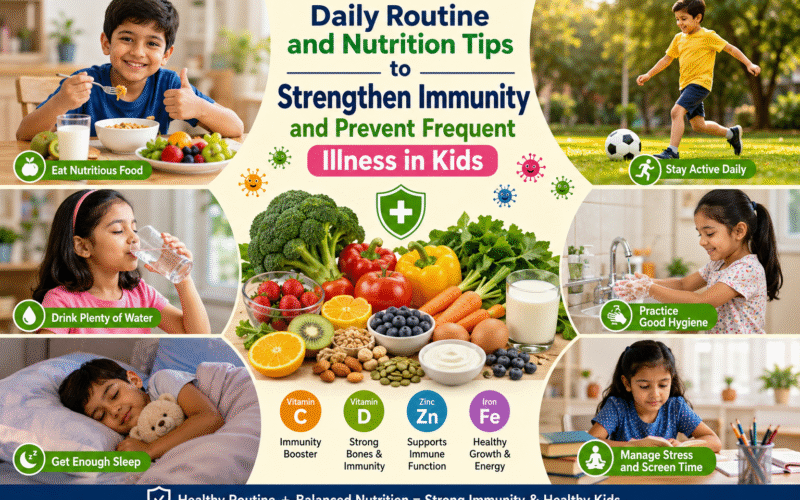
Parents often worry when their children experience frequent colds, coughs, or infections throughout the year. While occasional illness is a normal part of childhood, establishing healthy daily habits can significantly improve kids immunity and support their growing immune systems. A combination of balanced nutrition, adequate sleep, regular physical activity, and proper hygiene helps children fight infections more effectively and recover faster.
This guide explains evidence-based strategies to strengthen kids immunity naturally while reducing the risk of frequent illnesses.
Why Is a Strong Immune System Important for Kids?
A child’s immune system develops continuously during the early years. Exposure to common viruses and bacteria helps build immunity, but healthy lifestyle habits ensure the immune system functions efficiently.
A strong immune system helps children:
- Fight common infections effectively
- Recover more quickly from illnesses
- Maintain better energy levels
- Support healthy growth and development
- Improve school attendance and overall well-being
Essential Nutrition Tips to Strengthen Kids Immunity
What Foods Boost Kids Immunity Naturally?
A balanced diet provides the vitamins, minerals, proteins, and antioxidants necessary for immune function.
Include:
- Fresh fruits such as oranges, guava, kiwi, papaya, and berries
- Green leafy vegetables including spinach and broccoli
- Colorful vegetables like carrots, tomatoes, and bell peppers
- Whole grains
- Lean proteins including eggs, fish, chicken, pulses, and beans
- Nuts and seeds (age-appropriate to prevent choking)
- Yogurt and other probiotic-rich foods
These foods provide Vitamin C, Vitamin A, Zinc, Iron, and antioxidants that support immune health.
Why Is Protein Important for Immunity?
Proteins help build antibodies and immune cells.
Healthy protein sources include:
- Eggs
- Lentils
- Chickpeas
- Dairy products
- Fish
- Chicken
- Soy products
Aim to include a protein source in every major meal.
Should Kids Drink Enough Water?
Yes.
Proper hydration supports circulation, digestion, and normal immune function.
Encourage children to:
- Drink water throughout the day
- Eat water-rich fruits
- Limit sugary drinks and soft drinks
Daily Routine Tips for Better Kids Immunity
How Much Sleep Do School-Age Kids Need?
Sleep is one of the strongest natural immunity boosters.
Recommended sleep duration:
- Ages 6–12 years: 9–12 hours
- Teenagers: 8–10 hours
Maintain:
- Consistent bedtime
- Limited screen time before sleep
- Quiet sleeping environment
Why Is Physical Activity Important?
Regular exercise improves blood circulation and supports immune function.
Children should engage in at least 60 minutes of physical activity daily, including:
- Outdoor games
- Cycling
- Swimming
- Running
- Sports
- Dancing
How Does Hand Hygiene Prevent Frequent Illness?
Proper handwashing significantly reduces the spread of infections.
Teach children to wash hands:
- Before eating
- After using the restroom
- After outdoor play
- After coughing or sneezing
Wash with soap and water for at least 20 seconds.
Can Too Much Screen Time Affect Immunity?
Excessive screen time may:
- Reduce physical activity
- Delay bedtime
- Affect sleep quality
- Increase sedentary behavior
Encourage healthy screen limits and more active play.
Vitamins and Nutrients That Support Kids Immunity
Vitamin C
Sources:
- Oranges
- Guava
- Kiwi
- Strawberries
- Bell peppers
Supports white blood cell function.
Vitamin D
Sources:
- Safe sunlight exposure
- Fortified dairy products
- Eggs
- Fatty fish
Vitamin D deficiency may increase susceptibility to infections.
Zinc
Sources:
- Beans
- Lentils
- Pumpkin seeds
- Meat
- Dairy
Supports immune cell development.
Iron
Sources:
- Green leafy vegetables
- Lentils
- Beans
- Lean meat
Iron deficiency can weaken immune response.
Healthy Daily Routine for School-Age Kids
| Time | Healthy Habit |
|---|---|
| Morning | Nutritious breakfast with protein and fruit |
| School | Balanced lunch and adequate water |
| Afternoon | Outdoor play or sports |
| Evening | Healthy snack, homework, family time |
| Night | Light dinner, limited screens, adequate sleep |
Foods That May Weaken Kids Immunity
Limit:
- Sugary snacks
- Soft drinks
- Processed foods
- Deep-fried foods
- Excess packaged foods
- Highly refined carbohydrates
These foods may displace nutrient-rich options needed for optimal immune health.
When Should Parents Consult a Pediatrician?
Seek medical advice if your child experiences:
- Frequent severe infections
- Poor growth
- Persistent fever
- Recurrent pneumonia
- Repeated ear infections
- Unexplained weight loss
- Delayed recovery from illness
A healthcare professional can evaluate for nutritional deficiencies or underlying medical conditions.
Frequently Asked https://noblehospitalkundli.com/Questions
What is the best food to improve kids immunity?
A balanced diet rich in fruits, vegetables, lean proteins, whole grains, dairy, and healthy fats supports overall immune function rather than any single “superfood.”
Can vitamins prevent frequent illness in kids?
Children generally obtain adequate nutrients from a balanced diet. Supplements should only be given when recommended by a healthcare professional.
Does sleep affect kids immunity?
Yes. Adequate sleep supports normal immune function and helps children recover from infections.
How much water should school-age children drink?
Needs vary with age, activity, and climate, but regular water intake throughout the day is important for overall health and hydration.
Can probiotics help strengthen immunity?
Some evidence suggests probiotics may support gut health and immune function, but benefits vary by strain and individual child. Consult a pediatrician before routine use.
Conclusion
Strengthening kids immunity involves consistent healthy habits rather than quick fixes. A nutritious diet, sufficient sleep, regular physical activity, good hygiene, and routine medical care work together to support a child’s immune system. By following these daily routine and nutrition tips, parents can help reduce the frequency of common illnesses and promote long-term health and well-being.
Leave a Reply