
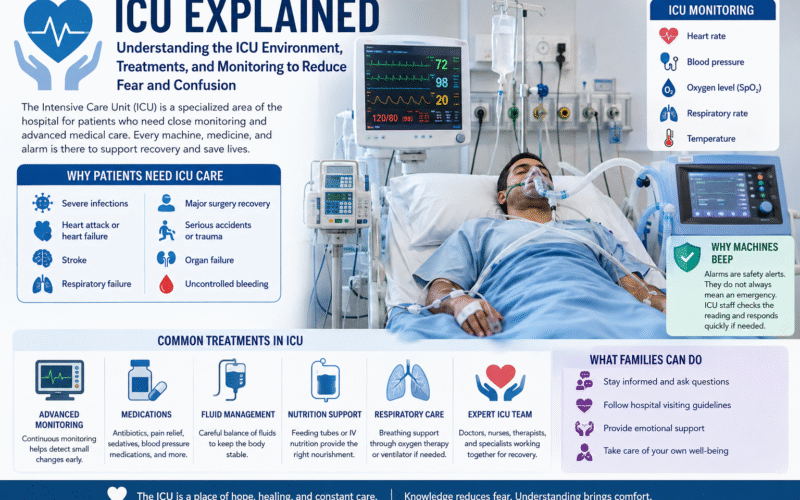
Hearing that a loved one needs to be admitted to the Intensive Care Unit (ICU) can be overwhelming. The unfamiliar machines, constant alarms, tubes, and medical equipment often create fear and uncertainty. However, understanding what happens inside an ICU can help families feel more confident and better prepared.
This guide explains the ICU environment, common treatments, and patient monitoring systems so you know what to expect during critical care.
What Is an ICU?
The Intensive Care Unit (ICU) is a specialized hospital department designed for patients with serious or life-threatening illnesses or injuries. Patients in the ICU receive round-the-clock care from highly trained doctors, nurses, and critical care specialists.
The goal of the ICU is to closely monitor vital body functions and provide immediate treatment whenever needed.
Why Might Someone Need ICU Care?
A patient may be admitted to the ICU for several reasons, including:
- Severe infections (Sepsis)
- Heart attack or heart failure
- Stroke
- Major surgery recovery
- Serious accidents or trauma
- Respiratory failure
- Organ failure
- Severe pneumonia
- Uncontrolled bleeding
Every ICU admission is based on the patient’s condition and the need for continuous observation and advanced medical support.
Understanding the ICU Environment
The ICU may look intimidating at first, but every piece of equipment has a specific purpose.
Patient Monitor
The monitor continuously displays:
- Heart rate
- Blood pressure
- Oxygen level (SpO₂)
- Respiratory rate
- Temperature
Doctors and nurses use this information to detect changes immediately.
Ventilator
Some patients cannot breathe adequately on their own. A ventilator supports breathing until their lungs recover.
Being on a ventilator does not always mean the condition is permanent. Many patients recover and are gradually removed from ventilator support.
IV Lines and Infusions
Intravenous (IV) lines allow medications, fluids, nutrition, antibiotics, and life-saving drugs to be delivered directly into the bloodstream.
Oxygen Support
Depending on the patient’s condition, oxygen may be provided through:
- Nasal cannula
- Face mask
- High-flow oxygen therapy
- Mechanical ventilator
Why Do ICU Machines Make So Many Sounds?
The alarms in an ICU are safety alerts—not necessarily signs of an emergency.
Machines may beep because:
- A patient’s movement affects a sensor
- Blood pressure is being measured
- Oxygen sensor shifts
- Medication infusion is complete
- The healthcare team needs to check a reading
Experienced ICU staff respond quickly to determine whether action is required.
Common Treatments Given in the ICU
Treatment depends entirely on the patient’s condition but may include:
Advanced Monitoring
Continuous monitoring allows healthcare providers to detect even minor changes before they become serious.
Medications
Patients may receive:
- Antibiotics
- Pain relief medicines
- Blood pressure medications
- Sedatives
- Blood thinners
- Heart medications
Fluid Management
Doctors carefully balance fluids to prevent dehydration or fluid overload.
Nutrition Support
If patients cannot eat normally, nutrition may be provided through feeding tubes or intravenous nutrition.
Respiratory Care
Specialists regularly assess lung function and provide breathing support when necessary.
Why Are Family Visits Sometimes Limited?
Many hospitals restrict ICU visits to:
- Reduce infection risk
- Allow patients adequate rest
- Perform medical procedures safely
- Maintain a calm treatment environment
These policies are designed to protect critically ill patients and improve recovery.
The ICU Team
Several healthcare professionals work together to care for ICU patients:
- Critical Care Physicians (Intensivists)
- Specialist Doctors
- ICU Nurses
- Respiratory Therapists
- Physiotherapists
- Dietitians
- Pharmacists
- Laboratory Technicians
Each team member plays an important role in the patient’s recovery.
What Families Can Expect
It is common for ICU patients to appear different because of:
- Monitoring wires
- Oxygen masks
- IV lines
- Feeding tubes
- Sedation
These treatments are often temporary and are used to stabilize the patient’s condition.
Families are encouraged to ask questions whenever they do not understand something. Clear communication with the healthcare team can reduce anxiety and confusion.
Recovery After ICU
Recovery continues even after a patient leaves the ICU.
Patients may require:
- Rehabilitation
- Physiotherapy
- Nutritional support
- Follow-up consultations
- Medication management
Recovery time varies depending on the illness, age, and overall health.
Tips for https://noblehospitalkundli.com/Family Members
- Stay informed by speaking with the medical team.
- Avoid relying on internet myths or misinformation.
- Follow hospital visiting guidelines.
- Offer emotional support and reassurance.
- Take care of your own physical and emotional health as well.
Conclusion
Although the ICU can seem frightening, it is one of the safest places for patients who need constant medical attention. Every monitor, alarm, medication, and treatment is carefully designed to support recovery and respond quickly to changes in a patient’s condition.
Understanding the ICU environment helps reduce fear, builds trust in the healthcare team, and enables families to support their loved ones with greater confidence. Knowledge replaces uncertainty—and that can make a difficult journey a little easier.https://noblehospitalkundli.com/
Leave a Reply