
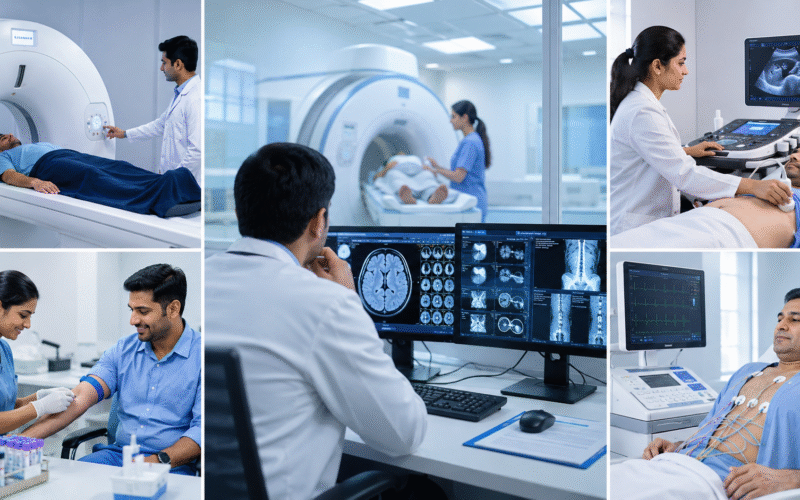
When it comes to healthcare, early and accurate diagnosis can make a significant difference. Many health conditions may begin with mild or unclear symptoms, making it difficult to identify the underlying problem through symptoms alone. This is where advanced diagnostic services play an important role.
At Noble Hospital, advanced diagnostic facilities are designed to support doctors with reliable information, helping them evaluate symptoms, detect diseases, monitor existing conditions, and plan appropriate treatment.
What Are Advanced Diagnostic Services?
Advanced diagnostics include modern medical tests and imaging procedures that provide detailed information about a patient’s health. Depending on the symptoms and medical history, a doctor may recommend blood tests, imaging scans, cardiac investigations, or other specialized evaluations.
These services can help healthcare professionals:
- Detect health problems at an early stage
- Understand the underlying cause of symptoms
- Confirm or rule out a suspected condition
- Monitor the progress of a disease
- Evaluate how well a treatment is working
- Make more informed treatment decisions
Why Accurate Diagnosis Matters
Symptoms such as persistent pain, fatigue, dizziness, fever, breathing difficulties, or digestive problems can have several possible causes. Diagnostic testing helps doctors look beyond the symptoms and gather objective information.
For example, imaging may help identify structural problems, while laboratory tests can provide information about blood counts, infection, organ function, or other important health markers.
The right test at the right time can help reduce uncertainty and support timely medical care.
Common Advanced Diagnostic Investigations
Depending on the patient’s condition, diagnostic evaluation may include several types of tests.
1. Blood and Laboratory Tests
Laboratory investigations can provide valuable information about overall health and help doctors evaluate conditions such as infections, anemia, diabetes, and problems affecting organs such as the liver or kidneys.
2. Ultrasound
Ultrasound uses sound waves to create images of internal organs and tissues. It is commonly used to evaluate areas such as the abdomen, pelvis, and other soft tissues.
3. CT Scans
Computed tomography (CT) provides detailed cross-sectional images of the body. Doctors may recommend CT scans when they need more detailed information than a conventional X-ray can provide.
4. MRI
Magnetic resonance imaging (MRI) produces detailed images of soft tissues and other structures. It can be useful in evaluating areas such as the brain, spine, joints, and certain internal organs.
5. ECG and Cardiac Investigations
Heart-related diagnostic tests can help doctors evaluate symptoms such as chest discomfort, palpitations, shortness of breath, or dizziness and assess cardiac function when clinically appropriate.
When Should You Consider Diagnostic Testing?
Diagnostic tests should generally be recommended based on symptoms, medical history, physical examination, and the doctor’s clinical judgment.
You may be advised to undergo diagnostic evaluation if you experience:
- Persistent or unexplained symptoms
- Recurring fever or infections
- Unexplained weight changes
- Persistent abdominal or chest discomfort
- Breathing difficulties
- Unusual fatigue or weakness
- Changes in blood pressure or blood sugar
- Symptoms that are worsening or not improving
Routine health check-ups may also include selected investigations based on age, risk factors, and individual health needs.
The Role of Advanced Diagnostics in Preventive Healthcare
Diagnostics are not only useful when someone is already sick. Appropriate screening and routine investigations can sometimes help identify health risks before noticeable symptoms develop.
Early identification can give patients and doctors an opportunity to address certain conditions sooner and make appropriate lifestyle or treatment decisions.
However, not every person needs every diagnostic test. Testing should be guided by individual medical needs and professional advice.
Why Choose Noble Hospital for Diagnostic Care?
At Noble Hospital, diagnostic services are an important part of comprehensive patient care. Having diagnostic evaluation as part of a healthcare setting can help facilitate coordination between investigation and clinical consultation.
The goal is simple: provide patients and doctors with dependable diagnostic information that supports better healthcare decisions.
Conclusion
Advanced diagnostics have become an essential part of modern healthcare. From laboratory investigations and ultrasound to CT, MRI, and cardiac testing, appropriate diagnostic tools can help doctors understand health conditions more clearly and plan care more effectively.
If you have persistent or unexplained symptoms, don’t ignore them. Consult a qualified healthcare professional to determine whether diagnostic testing is appropriate for you.
Noble Hospital — supporting better healthcare through timely evaluation, modern diagnostics, and patient-focused care.
Leave a Reply